
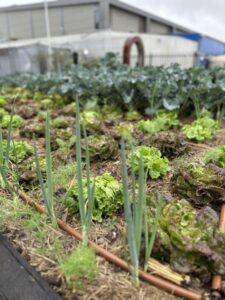
The future of urban farming depends on how we value space
By Michael Casey
Over the past decade, urban farming has gathered extraordinary momentum with it being framed as a clean and hopeful solution for cities wrestling with food insecurity, population growth and the impacts of climate change. The promise is attractive; where someone can take under-used space, stack it vertically or spread it across rooftops, suddenly you can have a decentralised, resilient, hyper-local food system. But the realities emerging from rapidly developing cities tell a more complicated story, one shaped by the tight availability of land, escalating development pressures, and the fragile economics of food production in places where space has never been more contested.
In many developing cities, land is being reshaped at a speed that leaves little room for slow, incremental practices like farming. Blocks on the fringe are swallowed up for housing estates and logistics hubs, while inner areas that once supported informal gardens or small peri-urban farms are rezoned and densified. As soon as land values escalate, any plot not producing maximum commercial return becomes vulnerable and food production simply cannot compete with commercial rents. Even where physical space does exist, the economic logic rarely supports long-term cultivation.
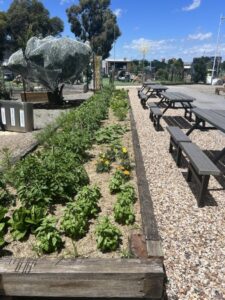
We know the appetite for urban farming is there with numerous examples scattered around our cities and suburbs, but the conditions that allow them to thrive is disappearing under the weight of unpredictable development. For the millions living in informal settlements, the challenges are different but equally limiting. Micro-spaces such as narrow verges, tiny courtyards or slivers of leftover land may offer potential, but occupancy is often unstable. Residents think twice before planting in spaces that could be removed without notice, and expecting these uncertain plots to feed a city misunderstands the instability many people face. The issue is not interest, but the lack of secure ground, and, in many cases, councils are quietly supporting food growing on nature strips and small public pockets but do stop short of formally endorsing it because of the perceived risks and potential liability if accidents occur.
Rooftops are often held up as the next great agricultural frontier, yet their limitations surface quickly with many buildings simply not being able to withstand the loads required for growing media, supporting irrigation or having people moving around safely. Waterproofing, access and safety requirements introduce layers of cost and complexity, and in some cases, rooftops are increasingly spoken for with solar arrays, telecommunications equipment, mechanical plant and communal terraces all competing for the same square metreage. Even in cities celebrated for rooftop farming, like New York, the success stories are anomalies rather than the norm. Projects such as Brooklyn Grange thrive because of unusual circumstances such as long-term leases, structurally robust buildings and, most importantly, committed investors. Most roofs in high-value cities are financially out of reach for food production, even if they seem spatially available.
This tension between aspiration and reality becomes more visible when we examine places that invested heavily in high-tech indoor farming and still struggled to make it viable. Singapore, often hailed as a leader in this space, has experienced a wave of closures and retrenchments in the last two years as several well-publicised vertical farms such as Growy Singapore, which opened with great optimism in late 2024, but wound up operations due to unsustainable costs, technical inefficiencies and an inability to generate sufficient profit in a high-cost urban environment. Other major players, such as Indoor Farm Factory Innovation (I.F.F.I.) had to shut down even after receiving government support and return large facilities that could not reach commercial maturity. Earlier ventures like VertiVegies also abandoned expansion plans for similar reasons.
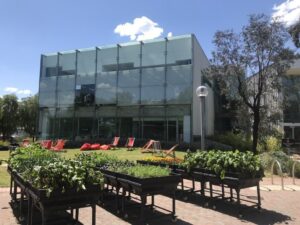
These closures have now prompted Singapore to step back from its earlier goal of producing 30 per cent of its food locally by 2030. This shift is not a failure of ambition but more a recognition that the economics of high-tech urban farming is far more fragile than the glossy renderings suggest. If a wealthy, tightly governed city with strong policy support struggles to make vertical farming financially viable, the challenge is magnified many times over in cities dealing with informal markets, limited capital, and infrastructure that cannot reliably support high-energy systems.
The broader message is not that urban farming should be dismissed, but that we need to rethink how we design and value the spaces that could support it. Part of the challenge is that we continue to treat productive landscapes as optional extras rather than essential infrastructure. Until cities are willing to subsidise the true costs of land use, protect the green spaces they already have, and recognise the long-term social and ecological returns they generate, urban farming will always be squeezed to the margins. As designers, planners and horticultural specialists, we need to advocate for spaces that serve more than one purpose: landscapes that are both ornamental and edible, beautiful and productive, biodiverse and functional. When growing food is integrated from the start through a mixed planted landscape, adaptable public spaces and rooftops or courtyards designed with real horticultural intent, the concept of urban farming becomes far more than a decorative gesture, and it will shift from being a struggle for leftover space to a deliberate feature of the urban fabric.
Urban farming still matters deeply to many individuals, communities and to society. It strengthens communities, enhances local nutrition, cools overheated neighbourhoods, reconnects people with the act of growing food, and brings softer, more human-scaled experiences back into dense urban settings. However, it works best when deployed strategically, in contexts where stability, purpose and shared benefit align, e.g. schools, social housing, healthcare precincts, community gardens and peri-urban transition zones. These are the places where food-growing can genuinely flourish without being overrun by commercial pressures.
In the end, the real barrier to urban farming is not a lack of imagination but a lack of viable, affordable and well-protected space. By acknowledging these constraints and by learning from the successes and failures of places like Singapore and New York, we can build more realistic and durable models. Urban farming is not the miracle cure for urban food systems, but it remains an important contributor to a more resilient, equitable and ecologically grounded city. The opportunity now lies in designing it into the fabric of our cities with honesty, intention and long-term commitment.
Michael Casey
Director, Evergreen Infrastructure
Company Director, Australasian Green Infrastructure Network
Technical Panel, AIPH World Green Cities Awards
World Ambassador for World Green Roofs Day
E: michael@evergreeninfrastructure.com.au