
The perfect cherry for a tropical Christmas
By Caleb Roberts
Botanical name: Malpighia emarginata ‘Florida Sweet’
Common name(s): Acerola, Barbados cherry, West Indian cherry, wild crepe myrtle, Antilles cherry
Family: Malpighiaceae
Origin or native range: Hailing from Central America and Mexico, the highest production of Malpighia emarginata (Syn. Malpighia punicifolia) now comes from Brazil. Its common name, acerola, is also used for the closely related species Malpighia glabra.
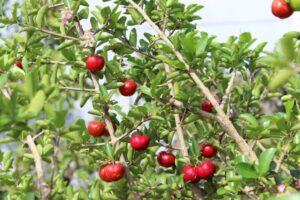
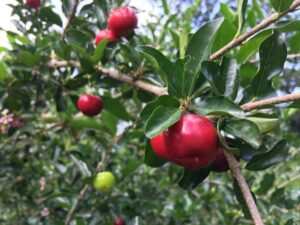
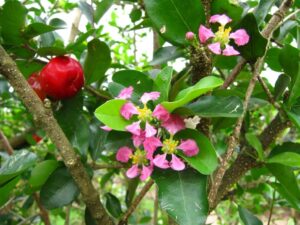
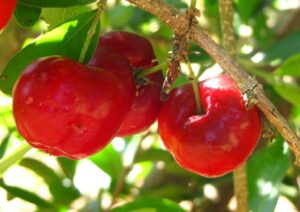
Description: Acerolas are shrubby trees growing to three to four metres. Their opposite leaf pattern and straight internodes give rise to very square, geometric branches that make a great textural backdrop in a small garden setting. The leaves are generally ovate, darken through green shades as they mature, and have a covering of fine hairs that can cause irritation in some people. The sessile flowers have five petals, coloured pink in the ‘Florida Sweet’ cultivar, with a crepe-paper appearance that gives this plant its other common name, wild crepe myrtle. The flowers grow mostly on old wood, and cover the tree with yellow-centred, pink-petalled stars. While the fruit set is not as prolific as the flowering, the fruits ripen within 30 days of pollination into slightly lobed, dark red cherries. The fruit can be eaten from early red stages, with sweetness increasing as the colour darkens. In stone fruit terms, they would be considered a clingstone fruit, although they often have three winged seeds rather than a single pit.
Cultural requirements: Acerolas have a relatively small and shallow root system, which leaves them vulnerable to strong winds, but makes them quite versatile for pot culture or tucking in tight corners that a traditional cherry would not cope with. These shrubs thrive in the tropics and subtropics and can survive very short frosts with some setbacks. The stress response for both cold and dry is leaf drop, and they can take on a full deciduous habit in extreme climates. Recovery is a reliable trigger for flowering, and they can be orchestrated to force a harvest. Optimum conditions are full sun, perfect drainage, slightly acid soil with 1,000 to 2,000mm of annual rainfall. Acerolas can cope with clay but not waterlogging, and shade leads to etiolation and reduced vigour, but is overall handled quite well.
Cultivation: Seed viability is unreliable, and grafting has been successful to multiply some cultivars, reportedly onto Byrsonima crassifolia as an alternative rootstock. The acerola is an easy plant to multiply by cuttings. Hardwood cuttings into community pots can be done year-round, with best success in spring. Cuttings will flower that season, and even hold fruit, but best practice is to remove these early.
Landscape and horticultural uses: Acerola is a versatile plant in most home garden, orchard or urban designs. The dense, geometric growth makes a textural hedge, and the hardy, shallow root system means they can be tucked into less-than-ideal screening positions. They are equally suited to espalier, pots or a standalone shrub in an orchard environment.
Maintenance: Compared with a traditional cherry, we have found acerolas to be very low maintenance. They can be pruned, espaliered or hedged, which keeps the fruit within easy reach for harvest. We have harvested from multiple sites and found very little bird damage, and fruit fly is not a noticeable issue. With such a quick ripening period, acerolas do not seem to abort early, and are not noticeably stung on harvest. The smaller stature of the pruned shrub is much easier to net than a full cherry tree, and being cutting-grown, acerola does not have the suckering issues of a grafted Prunus. The fruit does not hold well on the tree, and with seasonal leaf shedding can lead to extra maintenance if planted near pathways.
Ecological and cultural notes: Dried acerola powder is now available in health food stores, who spruik its high vitamin C content. With this increase in market popularity, the plants’ availability has also increased. It makes a fantastic substitution for traditional cherries, and I look forward to seeing it spread onto more Christmas menus and into our everyday culture.
All images supplied by the author.
Caleb Roberts
Daleys Fruit Tree Nursery
W: www.daleysfruit.com.au