
A taste for landscaping
By Patrick Regnault
During COVID-19, the popularity of growing one’s own food increased dramatically. However, food production to the level of self-sufficiency requires more land and effort than most people are willing to do or capable of making. That said, we can add trees, shrubs and climbers, or even aquatic plants to our plant palettes that will look good and produce food. Doing so will add value and kudos to your landscape designs for those clients seeking to grow more of their food at home, whilst still having a beautiful garden.
In considering if you want to use the plants listed below you must first carefully assess whether those plants are suitable for your climate, region and soils. Any spray used on plants intended for human consumption should have a retention period, even if it is a nature-based pesticide, as some, mostly systemic products, can have a long-lasting effect on the immune system.
I will start with some common plants and follow up with more unusual ones.
Trees
Amelanchier spp.: This genus includes trees and shrubs with gorgeous flowers that can be grown in colder climatic zones. The berries are best eaten when they ripen to dark purplish-blue. They can be consumed fresh or in drinks and desserts, and are high in fibre, Vitamin C, antioxidants, iron and protein. Amelanchier alnifolia (alder-leaved serviceberry) is grown commercially for its fruits in Canada.
Atractocarpus fitzallanii: The native gardenia is an attractive small tree with fragrant flowers. The fruits, yellow when ripe, can be eaten raw scooped from its hard casing.
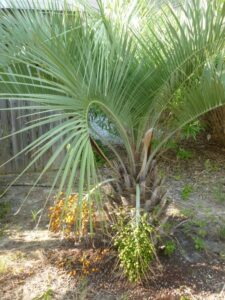
Butia capitata: This very hardy South American palm has edible fruit which is used in jellies, wines and jams. Eaten raw it has a sweet and sour flavour, but the fibrous texture may not suit everyone’s palate.
Ceratonia siliqua: The carob tree has ornamental value and edible seed pods that can be used as a substitute for chocolate when roasted and ground. Seed pods can be eaten fresh as a sweet treat, but a word of warning before you do so: remove the hard seeds first to avoid costly dental bills!
Sambucus spp.: All elder species have berries that are toxic if eaten raw. When cooking these berries, all stalks, stems and leaves must first be removed as they contain low levels of toxins that can cause illness in people. This said, the fruits and flowers of the elder can be used for culinary purposes when prepared properly. Flowers can be used to make cordials, wines, syrups, desserts, jams and jellies, whilst cooked berries are used in sweet and savoury dishes. Australia has two species of Sambucus, S. australasica (yellow elderberry), and S. gaudichaudiana(white elderberry).
Shrubs, climbers, ground covers and other plants
Agathosma apiculata: This South African bush has edible leaves used to add a garlic-like flavour to savoury dishes, pickles, oils and vinegars.
Austromyrtus dulcis: The midgen berry is not an uncommon plant, however it is underutilised in cooking. The edible fruit possesses a sweetness like lollies. They can also be baked and, when added to a crumble or pie, will give them a tangy gingery flavour.
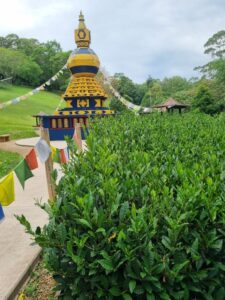
Camellia sinensis: The tea plant makes a great hedge that can shelter small nesting birds. The young, green leaves can be steamed or dried to make green tea, and, in some regions, green shoots are boiled and eaten as a vegetable.
Carpobrotus spp.: There are six species of Carpobrotus native to Australia. The fruits can be eaten fresh whilst the leaves can be eaten fresh or cooked. The juice of the leaves provide relief when applied to insect bites as it has a cooling, soothing, and rapid effect. Only use native species as exotic species tend to become invasive weeds.
Coleonema pulchellum: The leaves of the pink diosma can be used as an aromatic flavouring with a taste like thyme or rosemary.
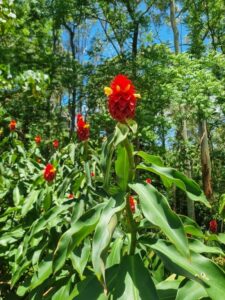
Costus barbatus: The red spiral ginger has edible yellow petals. A lemony treat whilst working in the garden.
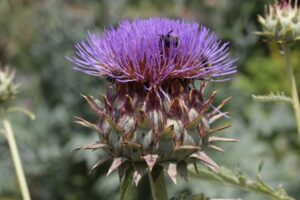
Cynara cardunculus var. scolymus: My preferred globe artichoke variety is ‘Prince de Bretagne’. If left to flower, the purple colour of the flower will give a stunning display in the garden.
Dioscorea spp.: There are two species of Australian yam. Dioscorea transversa is a climber from the eastern seaboard where it ranges from rainforest to moist sclerophyll forest. The roots are deep so be prepared to dig. The mature heart-shaped leaves are green, and the new foliage is a gorgeous bronze. The seed pods are very interesting. The leaves are fodder for three native species: Tagiates japetus (pied flat butterfly), Theretra nessus (yam hawk moth) and Tiracola plagiata (cacao armyworm). Note that the cacao armyworm is an international pest as it attacks the fruit of food plants including but not limited to cacao and banana, so be careful where you plant yams. The second species, D. hastifolia (Warrine), is from Western Australia and is an important food for the Noongar people. Warrine is a yam traditionally harvested during October and November. The tubers can be eaten raw but are said to taste better lightly roasted and accompanied with butter and salt. Warrine can be used in a wide variety of dishes, both sweet and savoury.
Hosta spp.: The plantain lily has edible shoots that are used in Asian cuisine. Pick the young, curled shoots, no more than a third of them, to ensure the plant continues to grow, and steam or stir fry them. The taste is like asparagus although somewhat more bitter.
Microseris spp.: The yam daisy has been a staple food for Aboriginal Australians in the southeast corner of the country. The plants, roots and leaves are edible and can be eaten fresh or cooked. The roots are ready to harvest when the plant is in bloom. The survival of Microseris lanceolata (Murnong or yam daisy) is threatened by sheep grazing and urban sprawl. Conservation efforts are underway to save it. Purchase plants from specialised native nurseries.
Osmanthus fragrans: When used as an infusion, the flowers of sweet osmanthus add a light, floral taste to tea, jams and all forms of desserts.
Rosa spp.: Roses are very common plants that produce edible petals and fruit. The petals can be used as a flavouring in dishes and drinks whilst the fruits (rose hips) make a delicious jelly, jam, syrup or tea.
Aquatic plants
There are many aquatic plants that are both edible and ornamental, and can be grown in ponds or pots.
Cycnogeton procerum: Water ribbons is a native plant that has many edible parts. The tubers can be eaten raw or cooked, and the green fruit is said to taste like peas. The leaves can contain a carcinogenic compound, mostly during times of drought, and are best avoided.
Eleocharis dulcis: The water chestnut has a crisp nut-like texture and is commonly used in many Asian dishes. It needs to be cooked, as eaten raw it can cause facial paralysis.
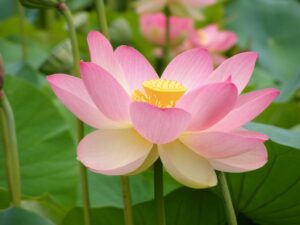
Nelumbo nucifera: The rhizomes of the sacred water lotus are edible, and the seeds are used to make a paste. If you have eaten the delicious mooncake, then you will understand the appeal of this plant.
Oenanthe javanica ‘Flamingo’: The beautiful foliage of this water dropwort adds colour to pond margins. Some Oenanthe species are toxic, so proper identification is essential. Known as minari in Japan, where its hollow stems are used in cooking, this plant has a unique flavour; pepper and celery crossed with parsley.
Important considerations
A plant can be edible in part or whole but toxic if not prepared properly. Examples of this are the seeds of Macrozamia communis (Burrawang cycad) which are edible only after extensive and careful preparation, otherwise they are highly toxic. Castanospermum australe (black bean or Moreton Bay chestnut) seeds also require extensive preparation before being safe to consume.
Another consideration is just because a plant is edible, it is not necessarily nutritious, or indeed palatable. Some plants have only been consumed in times of famine. Bracken fern rhizomes were made into bread in France during the famines of the eighteenth century, with disease being a side effect of the extended consumption of this plant given its carcinogenic nature.
Eating ornamental or wild plants can add interest, nutrition and taste to dishes. However, proper identification and understanding how to prepare and cook them is essential if they are to be consumed safely. There are articles and books written on this subject but look for those where the plant’s preparation for consumption, and its nutritional values, are clearly spelled out. Always use common sense alongside your culinary curiosity, and your landscape designs, as well as the health of your clients, will ultimately benefit.
Patrick Regnault FAIH RH0062
Interactive Landscapes
E: patrickregnault@hotmail.com