
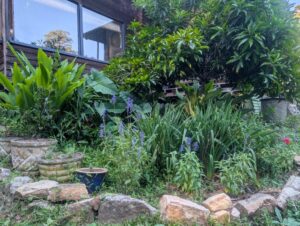
Food forestry in the urban landscape
By Pauline Haydock
Australians have been avid gardeners for many decades. We have come a long way from the post war aesthetic of a front yard with a bed of roses, a cypress hedge and a competitively tended lawn. Things are changing. The landscape, as it were, has a new horizon and the view includes edible plants.
Cultural and demographic changes are a driving force in this space. A growing, and far from complete, acceptance that people have been producing food for millennia in this land is also part of the picture. Many new Australians experience deep connection and meaning from being involved in food production. For a long time in modern Australia, the production of food has been outsourced, perhaps seen as something that someone else should do for us. People are becoming more aware that gardening for the purpose of growing food carries with it so many rewards –, at the personal level, on the community level, on an ecological level, and on a landscape– wide aesthete.
Many Australian backyards have at some time had a lemon tree; down south, a mulberry or a peach; up north, a mango and some bananas. Now interest is growing in more ‘exotic’ plants such as yuzu, dragon fruit, jujube, chocolate pudding fruit, açaíberries, finger limes and other bushfoods, in both front and backyards. Changing demographics are also driving interest in niche fruits like amla and star gooseberry, and different culinary traditions are being embraced across the country.
New horizons
And this is where it gets interesting. A lot of people are nostalgic for the foods they ate as children. If someone was born overseas, in tropical Asia or the Pacific, for example, but now resides in one of Australia’s urban centres, they have an outsized motivation to grow foods they know but which may not necessarily be suited to the local climate. They push these climate barriers aside and try plants well outside their natural range. The result is a revolution in urban horticulture.
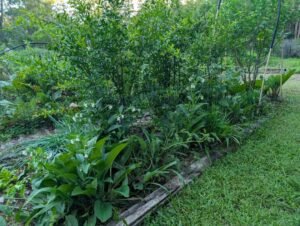
With a lot of people only having the luxury of a backyard of modest proportion, the trend towards food forestry has enabled this boundary adjustment. Food forests host and employ a multitude of different edible and ornamental plants, growing together, in beneficial relationships, in small, or indeed large, spaces. They are ‘pocket forests’ and create microclimates that enable plants to thrive where they otherwise would not if grown out in the open. They also have a broader climate resilience as average temperatures climb, and rainfall patterns shift.
Food forestry has grown from practices like the Miyawaki method and syntropic farming. It draws heavily on holistic principles of permaculture design, basing species selection and planting arrangements on ecology, geography, observation and the needs and wants of the end user. Its application provides the opportunity to implement principles of landscape design with textural contrast, pattern and rhythm, colour and form, integrating the many into an aesthetic whole. Intentional design is desired. It can be formally presented, or wild and rambling. The result aims to mimic a natural ecosystem, with symbiotic relationships encouraged by applying the permaculture principles of zones and guilds.
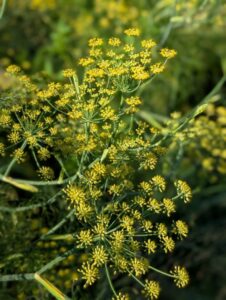
Zones define efficient ways in which the occupier uses and interacts with their space. Guilds are plant species associations including mutually beneficial, complementary and other plant associations. Mature corn providing a trellis, i.e. growing structure, to a climbing bean, whilst receiving nitrogen fixed from the air into the soil by the beans’ root systems is an example of a mutually beneficial plant association. A complementary relationship between plants might involve one deeply rooted plant taking nutrients from subsoil layers, whilst another draws food from the surface, thereby minimising direct competition. One example of this is a guild including deep-rooted comfrey and shallow-rooted garlic chives or Egyptian walking onion. Plants may also assist each other during establishment. Think of a sacrificial fast-growing tree, e.g. palm, or Panama berry and how it may provide shade to a developing, and sun– sensitive, cacao or avocado plant. In southern urban areas, that assistance may be needed to provide plants with shelter from cold. This certainly provides economic opportunities for increased plant sales and garden maintenance, as a yard can subsequently now host dozens of varieties rather than only a single lemon tree.
Guilds exist within planting strata and across them. These strata begin with the rhizosphere, that which is below the earth, unseen, yet fundamental to the health of the whole. Next, the groundcover layer which shields the rhizosphere from weather extremes and provides habitat to invertebrates. An herbaceous layer then follows, often a layer heavy with pollinator attractors like basils and mints. The strata may then move on to shrubs and trellised vines, most notably berry producers, and then to low fruiting or ornamental trees. If space permits, emergent full-sized fruit trees may punctuate the design, provide a focal element, as well as sheltering people and plants around it. The food forest framework provides the designer with the ability to buffer microclimates to experiment with a range of plants that may be outside their ordinary climate tolerances but can thrive with the assistance of the whole. In larger scale models, the addition of trees for timber production and firewood is an important feature.
In these models pruning, or ‘chop and drop’, weeding and pest control are part of everyday maintenance and the replenishment of the system, where plant and animal material is recycled back into nutrients by vertebrate and invertebrate life, thereby feeding the next growth cycle. Pruning promotes juvenile growth, keeping the scale and aesthetic of the planting to what was intended, and promotes fruiting when done properly. More active nutrient recycling methods of compost making, compost teas, worm farm castings and manure additions brings faster results. All the while, the system becomes more self-sustaining with each passing year. Layers of the forest can become lush with a more tropical understorey possible, as microclimates establish in the system.
It is important to note that no human-made and utilised landscape can be maintenance free,; an amount of skill and passion is required. In the modest backyard, the owner’s passion, fitness, and growing skill level shapes maturation of the system. In less industrialised cultures, much social capital exists to enable these systems to function successfully on a community level, outside small backyard systems. These skills are being relearned in Australia.
The benefits of the success of urban food forestry certainly go beyond visual appeal. Arid gardens are rendered more resilient to summer heat and more humidity is retained; temperate gardens more diverse as they are protected from extremes; subtropical and tropical gardens more drought tolerant. A final stratum in the design can be seen to develop in a ‘build it and they will come’ process. This sphere encompasses the beneficial life forms that are attracted to the diversity of habitat and food sources. They become contributors to the success of each layer, the garden and the wider environment. Hoverflies, butterflies, small birds and lizards become the pollinators, the pest control and the gardener’s companion. People are drawn into the fold, connecting to the land and nature, not just from visual interaction but as beneficiaries of physical activity, the harvest, food security and the mitigation of climate extremes. Community is built with the sharing of work, knowledge and harvests.
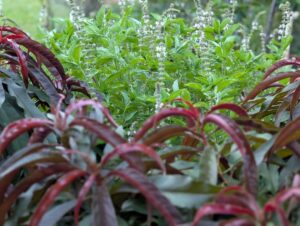
Ultimately, for Australians to grow into their landscapes we need to move past the notion of living on the land to one of living in the land with our community. Growing one’s own edimental food forest holds a lot of promise in this regard.
…………………………………………………………………………………………………..
Food forest strata and suggested species
The table below includes some examples of species, edible and complementary, suited to the seven main strata in food forestry, starting with the most important, the soil, which forms the basis of all life.
| Strata layer | Temperate | Subtropical | Tropical | Arid | Native | |
| 1 | Rhizosphere (Root/soil) | Elephant garlic Potatoes | Ginger Peanut Sweet potato | Galangal Taro Turmeric | Kulyu Youlk | Kulyu Murnong Youlk |
| 2 | Groundcovers | Clover Mint Strawberries | Mother of herbs Peanut Pepino Pinto | Betel leaf Peanut Pinto | Purslane Samphire | ‘Cousin It’ Creeping boobialla Fan flowers Hardenbergia Murnong Warrigal greens |
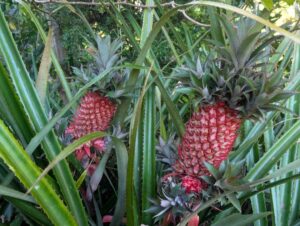
| 3 | Herbaceous (Non-woody) | Asparagus Chives Comfrey Rhubarb | Cape gooseberry Pineapple Tulsi | Lemongrass | Kangaroo grass Rock rose | Lemon sherbet coleus Lomandra sp. Native ginger Native leek |
| 4 | Shrub (Fruiting/pollinator) | Blueberries Currants Gooseberry Raspberries | Perennial basil Pomegranate | Cassava Pigeon pea Sugar cane | Old man saltbush Pomegranate | Blue tongue Davidson’s plum Finger lime Midyim |
| 5 | Small Trees (Low understorey) | Dwarf pome Dwarf stone fruit Hazelnut | Citrus Dwarf avocado Guava Jaboticaba | Amla Dwarf mango Papaya Sapodilla | Acacia Desert lime, Desert quandong Jujube | Brush cherry Kakadu plum Native mulberry Small leaf tamarind |
| 6 | Vines (Vertical) | Grapes Kiwiberry Kiwifruit | Climbing beans Choko Passionfruit | Black pepper Luffa Snake bean Vanilla | Cucurbits Grapes (irrigated) | Apple berry |
| 7 | Canopy (Tallest layer) | Chestnut Pecan Walnut | Avocado Macadamia Mulberry | Black sapote Custard apple Indian almond Mango | Carob Cherry ballart | Atherton oak Bunya nut Johnstone River almond Macadamia |
Pauline Haydock
Daleys Fruit Tree Nursery
M: 0491 741 174
E: info@daleysfruit.com.au