Why Integrated Pest Management matters in indoor green infrastructure
By Michael Casey
Indoor green walls introduce nature into hospitals, schools and workplaces, but maintaining these living systems requires careful and knowledgeable horticultural management. Integrated Pest Management helps protect plant health while safeguarding the people who share these spaces.
Cities are becoming greener in visible and exciting ways with green roofs appearing above offices, biodiversity gardens transforming rooftops and podiums, and inside many of our public buildings living green walls now provide striking visual connections to nature. Hospitals, universities, offices, shopping centres and civic buildings are increasingly incorporating internal green walls as part of broader strategies aimed at improving wellbeing, indoor air quality and the overall experience of being inside large urban buildings.
While these installations are often admired for their beauty and environmental contribution, the long-term success of indoor green walls depends on something far less visible but equally important, and that is careful horticultural management. Green walls are living ecosystems installed within controlled environments and their success relies on carefully balanced irrigation systems, specialised growing media, lighting regimes, and a diverse palette of plant species selected for their suitability to indoor conditions. Because these systems are living landscapes, they inevitably interact with the wider ecological processes that influence plant health. Insects, microorganisms and fungi are naturally part of this environment and need to be encouraged. The goal of a professional horticultural management program is therefore not to eliminate all biological activity, but to understand and manage it in ways that maintain plant health while protecting the people who use the space.
This is where Integrated Pest Management (IPM) becomes essential. IPM is a holistic approach to pest and plant health management that prioritises prevention, monitoring, and ecological balance rather than relying heavily on chemical pesticides. In indoor public environments this approach becomes even more important because the people sharing those spaces, office workers, patients, students or visitors, may be directly affected by chemical treatments used within the building.
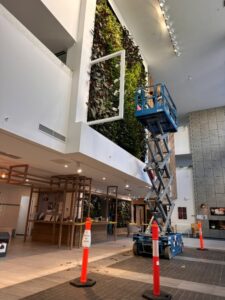
The importance of this approach becomes particularly clear in environments where occupants may be more vulnerable. At the Mercy Health Aged Care Centre in the east of Melbourne, for example, a large internal green wall forms part of the welcoming environment for residents, families and staff. In facilities supporting elderly residents, horticultural maintenance practices must be especially considered. Many residents have heightened sensitivities to chemicals, compromised immune systems or respiratory conditions, making the careful management of plant health essential. Applying IPM in this setting ensures that the living wall remains healthy and vibrant while minimising any reliance on pesticides that could affect indoor air quality or resident wellbeing.
IPM takes a very different approach to traditional pest control. Rather than waiting for a pest outbreak and immediately applying chemicals, IPM begins with understanding the broader ecosystem surrounding the plants. In indoor green walls this includes the plant selection itself, irrigation regimes, nutrient levels, air movement, lighting conditions and even cleaning practices within the building. When these factors are balanced correctly, plants are generally stronger and less susceptible to pest problems. Regular monitoring is a huge component in this process where skilled horticultural technicians inspect plants carefully, looking for early indicators such as minor leaf damage, changes in plant vigour, or the presence of small insect populations before they reach problematic levels. Sticky traps, visual inspections and routine plant health assessments allow practitioners to detect issues early, when non-chemical control methods are most effective.
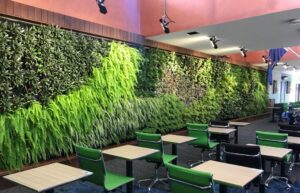
This level of attentiveness is equally important in educational environments where large numbers of young people interact with indoor plant systems. At Catholic Regional College Sydenham, in the north of Melbourne, a prominent green wall installed within the school’s study hall forms part of the daily learning environment for students. Hundreds of students pass through this space each day, studying, socialising and spending extended periods near the living wall. Maintaining plant health in such an environment requires a management approach that is both effective and responsible, and ensures the wall remains a positive educational feature without introducing unnecessary chemical treatments into a shared learning space.
In many cases, simple adjustments can resolve emerging plant health issues and it can start with the simple managing of irrigation schedules, adjusting lighting intensity, removing affected plant material or improving air circulation, all of which can significantly reduce pest pressure. These adjustments support plant health without introducing chemical inputs into the indoor environment. Another important aspect of IPM is recognising that not every insect presence constitutes a problem and that in many ecosystems a small population of insects is simply part of the natural biological cycle. Attempting to eliminate every insect often leads to unnecessary chemical intervention, which can destabilise the system and lead to recurring pest outbreaks.
Where intervention is required, IPM prioritises the least disruptive control methods first. Mechanical removal, biological controls or targeted treatments may be used before any consideration is given to chemical solutions, and with indoor green walls this approach is particularly valuable because it maintains the health of the living system while minimising potential risks to building occupants.
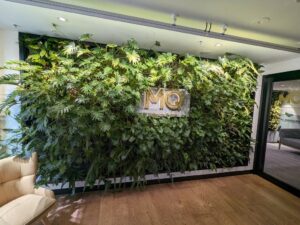
The importance of this balanced approach is also evident in high-profile commercial buildings where green walls form part of the architectural identity of the space. The green wall within the Melbourne Quarter office precinct, in the heart of Melbourne, sits prominently within the foyer of the building’s main entrance, where it is seen by office workers, visitors and members of the public throughout the day. In environments like this, the green wall must not only perform visually but also operate reliably within a busy commercial setting. IPM provides a structured framework that allows horticultural teams to maintain plant health and appearance while ensuring that building operations and occupant comfort are never disrupted by unnecessary chemical applications.
Client education is another key component of successful IPM programs. Many building managers and occupants are unfamiliar with the ecological dynamics of living plant systems inside buildings. The presence of a small number of insects can sometimes cause concern if it is not understood within the broader context of plant health management. Part of the horticultural professional’s role is therefore to help clients understand how these systems function. Explaining the principles of IPM, the monitoring processes in place and the commitment to minimising pesticide use can build confidence in the management approach. It also helps clients recognise that green walls are not static architectural features but living systems that require thoughtful and informed care.
When this understanding is established, clients are often supportive of the IPM approach because it aligns with broader sustainability and health objectives. Organisations that install green walls frequently do so as part of initiatives aimed at improving employee wellbeing, supporting learning environments or creating more welcoming healthcare facilities. A management strategy that minimises chemical use while supporting healthy plant systems reinforces these goals.
Ultimately, the success of indoor green walls depends not only on good design and installation but also on the professionalism of the horticultural teams responsible for their care. IPM represents a mature and responsible approach to this work where it recognises that plant systems are part of larger ecological processes and that managing them effectively requires observation, knowledge and restraint rather than quick chemical fixes.
As more buildings incorporate living systems into their design, the importance of thoughtful horticultural management will continue to grow. IPM offers a pathway that protects plant health, safeguards human wellbeing and respects the ecological balance within these living installations. When applied properly, it allows indoor green walls to function not only as beautiful design features but as healthy, resilient ecosystems that support the people who live, learn and work around them.
All assets seen in this article’s images, supplied by Evergreen Infrastructure, are managed by this business.
Michael Casey
Director, Evergreen Infrastructure
National Urban Green Infrastructure Round Table
World Ambassador for World Green Roofs Day
E: michael@evergreeninfrastructure.com.au