
Temporal dynamics in design
How living systems accumulate value
By Erik van Zuilekom
Unlike built infrastructure that generally depreciates from day one, ecologically designed landscapes appreciate through biological compound interest. This temporal inversion, where gardens become more valuable, stable, and integrated over time, emerges when we design with succession rather than against it. For professionals seeking to refine garden function, you need to build resilience and adaptability, respond to climate change and increasing extremes, reduce pesticide use and plant replacement, and enhance ecological services. Understanding how living systems may be structured to accumulate value fundamentally transforms design methodology, sustainability and economic outcomes.
The depreciation paradox
Conventional landscape installations generally peak aesthetically at hand-over, then require escalating inputs to maintain that initial aesthetic in a relative state of stasis. This mirrors the depreciation curve of built assets: highest value when new, declining thereafter. Maintenance becomes a battle against natural processes, including succession, decomposition and colonisation. This approach may treat gardens as static sculptures requiring preservation rather than living systems capable of self-improvement and adaptable regulation. The economic implications compound negatively by increasing labour costs, replacement plantings, chemical inputs, green waste disposal, fertiliser and irrigation demands.
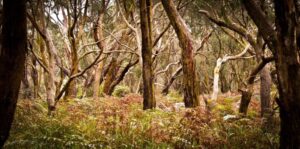
An exciting alternative exists. Natural ecosystems do not depreciate; they accumulate complexity, stability and productive capacity over time.¹ A forest does not require maintenance to prevent decline but builds soil depth, moderates its own microclimate, increases species diversity and becomes progressively more resilient to disturbance due to its flexibility to integrate change. This is the fundamental mechanism of ecological succession operating as compound development and subsequently compounding growth.
Compound interest in living systems
Financial compound interest generates exponential returns through reinvestment. Ecological systems operate identically with each year’s growth becoming the foundation for subsequent expansion. Unlike financial systems limited to numerical abstraction, living systems simultaneously compound across multiple dimensions.
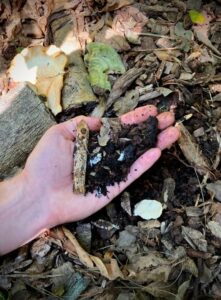
Soil development compounds: Initial organic matter additions feed pioneering microbes. These multiply, creating aggregates that improve water retention and enhanced moisture supports more plant growth, and generates more organic matter. Root exudates feed expanding microbial communities and mycorrhizal networks develop, multiplying nutrient exchange efficiency. Each cycle builds upon previous gains2.
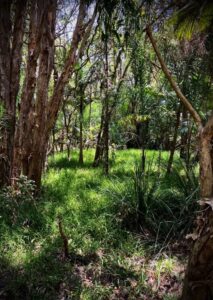
Microclimate moderation compounds: Early pioneer species create slight shade and wind reduction. This enables establishment of specialist secondary species that cumulatively bolster the current ecological structure. Their combined canopy creates deeper shade and higher humidity, permitting understorey development. The layered vegetation moderates temperature extremes more effectively, and each structural addition multiplies the moderating effect, creating compound microclimate amelioration.
Biological relationships compound: Initial flowering plants attract pollinators, and increased pollination enhances seed production. More seeds support birds and fauna diversification, and bird droppings import off-site nutrients and other seeds. Expanded plant diversity attracts more insect species and predator-prey relationships develop. Each new relationship enables multiple additional connections, driving exponential ecosystem development.
Designing for accumulation
The shift from maintenance-as-preservation to management-as-accumulation requires fundamental design reorientation. Rather than asking ‘How will I keep this looking the same?’, we ask ‘How will this system improve itself over time?’, and this consideration directly relates to the design and maintenance service industries alike. Achieving this requires additional design and maintenance skill sets directed towards developing the following:
Successional scaffolding: Structure plantings to support predictable transitions. Pioneer species are not temporary problems requiring removal, they are soil builders and microclimate creators preparing sites for subsequent species. Design the pioneer phase intentionally with fast-growing nitrogen fixers and biomass-accumulating species that will naturally senesce as canopy closure reduces light levels.
Syntropy acceleration: As introduced in my first article in the December 2025 issue of Hort Journal Australia, syntropic processes build order from entropy.² Design can accelerate these processes through strategic species placement by positioning heavy biomass producers where organic matter accumulation provides maximum benefit. Clustering nitrogen fixers near heavy feeders, layering decomposition rates by selecting species with varied leaf-drop and pruning cycles, creates consistent nutrient cycling.
Consider the ratio of support and climax species you would like to apply at each stage of development. The consideration of ‘support’ species, in and of itself, is a dynamic shift in design and maintenance mindsets, and opens avenues of syntropic development that the horticulture and maintenance industry can use to refine and create diverse income streams.
Zone expansion dynamics: The Adaptive Succession Zonation (ASZ) framework recognises that protected cores naturally expand outward over time as perimeter plantings mature. Design for this expansion: specify hardy pioneers at the edges with increasingly sophisticated specialist species toward zone centres, although include adaptive expansion species throughout all zones to allow for flux. These naturally spreading plants should be positioned to colonise developing zones as conditions permit. This is a flexible area of design, opening options for the exploration of pragmatic and ornamental planting design4 .
Mindful design and management
Ecological design processes may be coherently integrated into any landscape style. Plantings may be structured to produce living mulches, incorporating both syntropic and entropic processes, or can function as aesthetically structural species to integrate, and cleverly obscure chop-and-dropped biomass in the garden system, which accumulates to fuel soil-building and species succession. Chop-and-drop may suit large-scale gardens, while chop-and-mindful-placement offers improved aesthetics in compact sites. Chop-and-mindful-placement, combined with clever design to regulate viewpoints, can sculpt sophisticated outcomes as part of an ongoing framework of refinement developed through ecological and aesthetic management skillsets. The designer creates the original scaffolding structure that sets the system into integration.
Economic value accumulation
Economic valuation studies show properties with mature vegetation command higher market values:³
Reduced maintenance costs compound: Year One requires establishment irrigation and weeding, Year Two sees reduced irrigation as root systems develop and Year Three brings enhanced biological pest control. Year Five eliminates most supplemental irrigation while Year Ten operates largely autonomously. Each reduction in inputs compounds, saving not just direct costs but management time. This hinges upon selecting species that focus on ‘the right relationships’ between plants which transforms long-term outcomes.
Property value appreciation compounds: Studies demonstrate premium property values for well-landscaped sites.³ Ecologically designed landscapes appreciate faster than conventional gardens because while surrounding conventional landscapes decline, the maturing ecological garden becomes increasingly distinctive. This differentiation compounds as the relative value gap widens annually.
Ecosystem service values compound: Carbon sequestration increases with biomass accumulation and stormwater management improves as soil organic matter enhances infiltration. Air quality improvements scale with leaf area⁴ , urban cooling effects intensify with canopy development⁵ , and acoustic insulation increases with ecologically stratified canopy structuring⁶. Each service becomes more valuable as urban density increases, and climate impacts intensify10.
Maintenance as wealth management
This reframing transforms maintenance from cost-centred to investment strategy.
Selective editing, not wholesale preservation, removes only what impedes system development. That volunteer seedling might be tomorrow’s canopy tree, and allowing selective senescence creates establishment sites for new species.
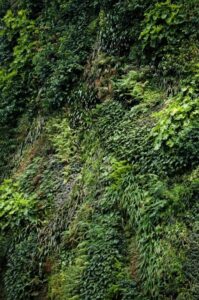
Resource cycling, not waste removal: Every organic material removed represents exported nutrients. Design maintenance protocols that cycle resources internally, for example, chop-and-drop prunings, or composting in place, means each retained resource compounds system wealth.
Succession guidance, not prevention: Direct natural transitions toward desired outcomes rather than preventing change, for example, if grass dominance threatens diversity, introduce woody seedlings rather than repeatedly mowing. We can guide the compound growth trajectory rather than resetting systems.
Temporal design strategies
Designing for compound growth requires temporal thinking.
Multi-phase establishment: We may install everything simultaneously, though we can also phase establishment to maximise resource efficiency. Year One establishes soil-building pioneers, Year Two adds nitrogen fixers, and Year Three introduces feature species into improved microclimates. Each phase builds upon previous investments.
Designed redundancy: Use multiple species capable of fulfilling each functional role with different temporal niches. Early succession specialists provide immediate function, mid-succession species replace them as conditions change, and late succession species provide long-term stability. Plants are agents of change within living systems; they offer structural forms that scaffold ongoing species succession, and build resources whilst simultaneously stimulating integrative diversity11.
Accumulation accelerators: Identify and amplify positive feedback loops. Mulch-generating species may be placed upslope of areas needing organic matter, and nitrogen fixers positioned where accumulations benefit heavy feeders. Each accelerator multiplies system development rate.
Future value streams
The third article in this series will explore how the Fractal Buffering Method multiplies these accumulation dynamics across spatial scales. The temporal foundation remains critical – designing for compound growth rather than static preservation.
‘Ecological design’ does not need to be linked to ‘wild’ aesthetics. It embodies integrated design methodologies applicable to any living system and aesthetics is merely the styling consideration. Food production systems are ideally positioned to integrate these ecological design mindsets and techniques.
As climate volatility increases and maintenance budgets tighten, the economic argument for ecological design strengthens. Gardens that improve themselves while reducing inputs represent superior return on investment. The compound growth inherent in living systems, properly designed and managed, transforms landscapes from depreciating assets into appreciating ecosystems.
Professional applications
For designers, this temporal perspective shifts project positioning from cost to investment. Maintenance contracts evolve from preservation services to wealth management, and client education focuses on value accumulation rather than static aesthetic preservation. The entire business model transforms when gardens are understood as compound growth systems as ecological enmeshing is the core principle that ignites compound growth potential. This is not theoretical. It is observable in every mature ecological garden and habitat, and the challenge lies in designing these accumulation dynamics intentionally rather than accidentally discovering them.
Conclusion
Temporal dynamics in ecological design reverse the depreciation paradigm of conventional landscapes. Through understanding compound growth in living systems, specifically soil development, microclimate moderation, and biological relationships, designers can create gardens that accumulate rather than deteriorate. This transforms maintenance from preservation to wealth management, generating compound returns both ecologically and economically. As living systems mature through designed succession, they demonstrate that the most sustainable landscapes are not those requiring the least change, but those designed to improve themselves through time.
Erik van Zuilekom
UnitedNatures Design / UnitedNatures Edible Garden
E: unitednatures@yahoo.com.au
References
- McDonnell, M. J., & MacGregor-Fors, I. (2016). The ecological future of cities. Science, 352(6288), 936–938.
- Andrade, D. C., Pasini, F., & Scarano, F. R. (2020). Syntropy and innovation in agriculture. Current Opinion in Environmental Sustainability.
- Gómez-Baggethun, E., & Barton, D. N. (2013). Classifying and valuing ecosystem services for urban planning. Ecological Economics, 86, 235–245.
- Nowak, D. J., Crane, D. E., & Stevens, J. C. (2006). Air pollution removal by urban trees and shrubs in the United States. Urban Forestry & Urban Greening, 4(3–4), 115–123.
- Bowler, D. E., Buyung-Ali, L., Knight, T. M., & Pullin, A. S. (2010). Urban greening to cool towns and cities: A systematic review of the empirical evidence. Landscape and Urban Planning, 97(3), 147–155.
- Zhao, Y., Sun, Z., Bai, Z., Jin, J., & Wang, C. (2025). How Vegetation Structure Shapes the Soundscape: Acoustic Community Partitioning and Its Implications for Urban Forestry Management. Forests, 16(4), 669.