
Myrtle rust resistant Myrtaceae
By Daniel Fuller
Plants infected with myrtle rust are still specified and sold in humid and subtropical parts of Australia every day. Once established in the landscape, the results are unmistakable with plants showing yellow powdery lesions, purple pustules and distorted new growth. Every susceptible plant introduced into a garden becomes a potential pathway for the disease to spread into previously unaffected landscapes and repeated fungicide applications are costly, time-consuming and often come with ecological trade-offs in landscapes intended to support biodiversity.
Myrtle rust (Austropuccinia psidii) is now entrenched along the east coast of Australia. It is well established in Queensland and northern New South Wales, present through coastal New South Wales, and continues to move through suitable climates that are warm and humid. Soft new growth is most vulnerable. In high pressure areas, susceptible Myrtaceae can defoliate repeatedly and decline over time.
For specifiers and growers, pretending this is not happening is no longer realistic.
Ozbreed’s myrtle rust trials were conducted with the University of Sydney’s Plant Breeding Institute to properly test cultivar-level resistance. Competitor and common Myrtaceae varieties were tested in April 2013 and found to be susceptible to myrtle rust. Plants were grown and deliberately exposed to myrtle rust under controlled conditions and infection was induced and monitored. Responses were assessed and grouped into resistance categories based on visible symptoms and disease development.
Highly resistant cultivars showed no visible signs of infection under test conditions. Resistant cultivars showed minor hypersensitive responses that restricted disease development. Moderately resistant cultivars developed pustules, but infection was limited compared to susceptible controls. Susceptible cultivars developed fully formed pustules at moderate to high frequency. Controls were included to confirm the pathogen was active and capable of causing typical disease symptoms.
What became clear during these trials is that myrtle rust resistance varies within species, and we cannot assume performance based on genus or species alone. Below are our best performers for myrtle rust resistance:
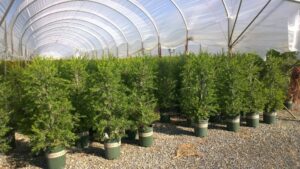
Callistemon viminalis ‘CV01’ PBR Trade Name Slim™ was rated highly resistant.
Callistemon viminalis ‘CV03’ PBR Trade Name Green John™ was rated highly resistant.
Callistemon viminalis ‘CV04’ PBR Trade Name Macarthur™ was rated resistant.
Tristaniopsis laurina ‘LUS01’ PBR Trade Name Luscious® was rated highly resistant.
Waterhousea floribunda ‘DOW20’ PBR Trade Name Sweeper®was rated highly resistant.
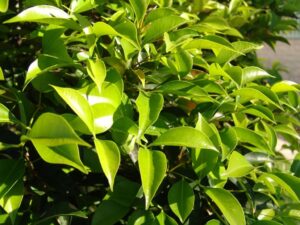
Acmena smithii ‘DOW30’ PBR Trade Name Sublime™ was rated highly resistant.
Myrtaceous plants are often highly important species within their natural ecosystems, delivering seasonal floral resources, fruits and seeds, and oily foliage that supports a range of fauna. Simply cutting them out of plant schedules is not the way forward. Instead, specifiers can opt for resistant cultivars instead of susceptible ones, and growers can ensure enough availability to avoid risky substitutions.
All images supplied by Ozbreed.
Daniel Fuller
Ozbreed Planting Strategist
M: 0426 169 708
E: Horticulture@ozbreed.com.au
W: ozbreed.com.au