Australian native edimentals – here to stay
By Jennifer McQueen
During Covid, as isolating households experimented with vegetable seedlings and graduated to fruit trees, Australian native edimentals began to catch the public imagination. ‘Covid shifted the perception of native edimentals from “hippy fringe” to mainstream curious,’ says Mark Tucek, founder of Tucker Bush. ‘But edimentals are not going away like the cottage-plant era or the succulent trend. They are here to stay.’
Longer-term change reinforces this shift. ‘By 2050, the world will need to feed 10 billion people,’ Mark says. ‘If we keep doing what we are doing, there will be a food gap of around 56 per cent. That is the big picture.’
Millennials are embedding new expectations into their greenlife purchasing. ‘We still want beautiful gardens,’ says Mark, ‘but this generation is looking for dual- or multi-purpose plants; greenlife that looks good but is also good for the environment. They want ponds that support water spinach and hedges you can eat, plants that are gorgeous, functional, eco-positive and delicious.’
Mark’s journey into native edimentals began decades earlier. A short-term job at Domus Nursery in Perth in 1983 sparked his interest in horticulture, and in 2011 he returned to the business to head up marketing.
‘I was walking around the nursery and realised we stocked only two native edible plants – the same two I had noticed thirty years earlier,’ he says. ‘That surprised me.’
Digging deeper, Mark discovered a few native edimentals were commercially available, but only if you knew where to look and what you were looking for. ‘Most people did not,’ he says.
With the support of Domus Managing Director Colin Groom, Mark began experimenting. ‘It was trial and error,’ he says. ‘If you want to grow lemons or broccoli, there is endless information available. For native edimentals, there was virtually nothing.’
In their quest to broaden the Tucker Bush range, they drowned, dehydrated and burnt batches, often learning the hard way.
Consultation with First Nations communities proved critical. ‘I was respectful and transparent,’ Mark says. ‘I asked permission to share knowledge about edible fruits, leaves, roots and shoots – species that have sustained Aboriginal and Torres Strait Islander peoples for thousands of years. Many were generous with their knowledge and keen to see indigenous names and practices preserved.’
When the cost of experimentation grew too high, Mark established his own nurseries – one for research and development and one for production, now largely Indigenous owned and run. Today, Tucker Bush grows around 90 Australian edible varieties, with a further 250 on its immediate development list.
‘When people choose a Tucker Bush plant, they do not realise the work behind it,’ says Mark. ‘Research into propagation, tube stock and tissue culture takes, on average, two years. Then you have to make the plant consistently presentable even when it is not fruiting or flowering because consumers are buying a promise.’
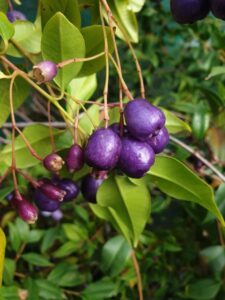
Bunnings proved pivotal. Mark initially approached the WA greenlife buyer who was open to trialling a small range in the Midland store. ‘You need depth to build demand,’ he says. ‘We started with six varieties, including lemon myrtle, midyim berry and Illawarra plum.’
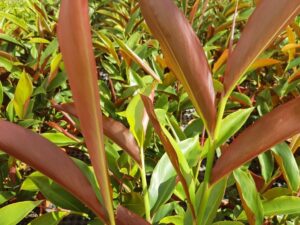
After success in Western Australia, Tucker Bush partnered with growers in other states and expanded nationally. A decade on, the business supplies Bunnings across Australia.
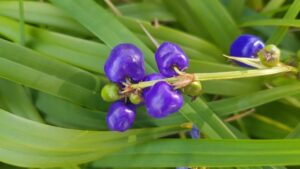
Education has been central to that growth. ‘The key is linking new products to something familiar,’ says Mark. ‘Illawarra plums were planted as street trees for years – people just did not realise the fruit was edible. If native thyme or bush basil sits in the herb section, the logic is obvious. Just about everyone has a lemon tree in their backyard but finger limes or dooja are perfect citrus for a G&T.’
That learning continues beyond the nursery gate. Tucker Bush supplies elite restaurants, helping consumers experience native edimentals on their plates before they plant them in their gardens. The Tucker Bush Schools program, run with Noongar educators, teaches the value of bushfood plants.
Looking ahead, Mark is entering a new phase, working with Aunty Dale Tilbrook, a respected educator and cultural leader, and chef Mindy Woods to help bring native foods into everyday food settings. ‘The goal is to make native ingredients easy to find and easy to use,’ he says.
For growers considering the space, Mark’s advice is blunt. ‘Work properly with First Nations people. Start small. Expect to fail – repeatedly. But if you keep learning, the opportunity is real. You just have to keep going until it works.’
Jennifer McQueen
Director of Communications
Greenlife Industry Australia