
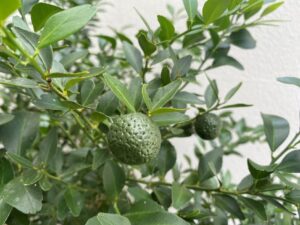
Unlocking the sublime in native Australian citrus
By Natalie MacGregor
Increasing global production of citrus offers opportunities for Australia’s little-known six native species, according to a University of Queensland researcher.
PhD candidate Joel Johnson at the Queensland Alliance for Agriculture and Food Innovation is investigating the chemical composition and nutritional potential of indigenous citrus species.
‘We have the highest number of endemic citrus species of any country, but despite a global citrus industry worth $140 billion, many Australians have never seen or eaten our citrus,’ Mr Johnson said.
Citrus is the most widely grown tree fruit crop used for direct consumption and was identified by the International Treaty on Plant Genetic Resources for Food and Agriculture as one of 35 food crops essential to the conservation and development of crop diversity.
Citrus production has also increased significantly over the past six decades, with most of the production occurring in subtropical regions. Currently, Australia is a small citrus producer globally, harvesting 760,000 tonnes in 2022 at a value of AUD 910 million. More than 70 per cent of fruit is sold fresh, and the remainder processed, with commercial citrus production concentrated in southwest NSW, eastern South Australia, northwest Victoria and the eastern Australian coast.

There are six described citrus species endemic to Australia, Citrus australasica (Australian finger lime), Citrus australis (Gympie or round lime), Citrus garrawayi (Mount White lime), Citrus glauca (desert lime), Citrus gracilis (Humpty Doo lime), and Citrus inodora (Russell River lime). However, many Australian citrus species’ nutritional value, chemical composition and bioactive properties remain unknown.
Mr Johnson is confident that this information could boost the industry. ‘In Australia, First Nations people have used the native citrus species as food and medicine for generations but there is little documentation of it,’ he said, ‘I found it very interesting that despite having the most citrus species of any country in the world we do not really know what is in them. With the exception of finger lime, Australian citrus is not commercially grown or generally found in our stores and that’s where my research comes in.’
For the first time, his research is systematically characterising the different species to determine whether there is any prospect of commercialisation or marketing them for their nutritional value and potential health benefits. ‘I’m looking at their chemical composition, the nutritional aspect, health benefits and characterising what is in these species,’ Mr Johnson said.
‘Their unique flavours and aromas suggest promising new applications in the food sector. There are a few scientific studies on finger lime dating back a few decades, but the techniques used then were not as accurate as what we are able to do now. My work will help determine whether there is any prospect in commercialising or marketing these species for their health benefits. I hope the information I document will give direction for the next steps forward.’
He has gathered samples of five of the six species for analysis and said they all have different possibilities.
‘Citrus inodora or Russell River lime for example has four times the vitamin C content of a standard Tahitian lime, while Citrus glauca or desert lime has more than six times the vitamin C content, which is a promising avenue for further investigation,’ he said, ‘In terms of the mineral content and antioxidants, they seem to be like other citrus species. We are also going to look at the other vitamin content, such as checking for vitamin A and all the B vitamins because we know they’re usually present in citrus. We would like to see how they match up to traditional citrus.’

Mr Johnson is also collecting data to investigate if there is any change in the chemical composition of the fruit between seasons. ‘Is there a big difference in composition from fruit grown in different geographical locations? he said, ‘We would like to know if the high vitamin C content is consistent, but that would require a much larger study.’
Native Australian Citrus germplasm is already documented as a valuable source of desirable traits in citrus breeding, including drought, cold, heat, salinity and disease resistance. The species are naturally adapted to Australia’s climate giving them an inherent resilience to drought, heat and other environmental stresses.
Mr Johnson said these characteristics may help solve some challenges facing citrus growers globally, including disease, a declining soil quality, changing climates, and narrowing profit margins. ‘Because they are adapted to Australian environmental conditions, some native citruses are more water-efficient and tolerant of temperature extremes,’ he said.
‘Modelling also suggests that some native species could be cultivated across drier or warmer parts of eastern Australia where citrus is not currently grown, like central and western Queensland. Earlier QAAFI research shows some of our native species are disease resistant so there is interest in developing hybrids that carry that gene. If we are looking at the genetics of these species, it is also important to know the chemical composition and nutritional properties because that will have an impact on the potential future hybrids. Again, that is something that no one has really researched yet.
‘While it might be good to cross breed native citrus with other species to boost resistance, we still need to know how that would impact the eating quality of the fruit.
I am also planning to look at the levels of other vitamins like folate and vitamin E and the flavonoids to gain a comprehensive understanding of their nutritional and bioactive properties,’ Mr Johnson said.
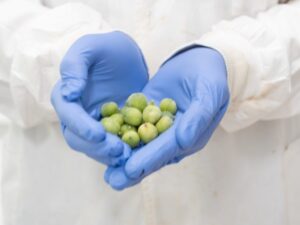
‘In other species we know that the flavonoids carry most of the health benefits. Flavonoids generally provide cardiovascular health benefits, by improving heart health, lowering blood pressure and preventing the risk of heart attack. Citrus can have anti-obesity and anti-inflammatory effects. So, we want to see if our native citrus contains the same flavonoids and therefore the same potential health benefits, or if they are different.
‘We are planning to do some preliminary bio-activity testing for that in the laboratory. One of the few documented traditional uses of finger lime was to treat colds.
There is not much published literature, but that could be a potential future use of the native citrus species; to create a supplement in cold medication to reduce inflammation. Anecdotally, there was also a report that First Nations tribes used one species to prevent illness or as an antiseptic.’
He said there was also potential interest internationally: ‘The finger lime industry is starting to grow with several other countries like China, Brazil, the United States and Guatemala producing them. Many of these export their produce to European and eastern Asian countries, where there is a very strong demand for these unique citrus varieties. That means there is an international market if we can scientifically establish the health benefits of the Australian species.’
This sentiment is shared by Jade King, a finger lime grower, Nuffield scholar, and the Chair of the Australian Native Fingerlime Alliance (ANFA). ‘Australia is starting to realise the global potential of native finger limes, not just as a vitamin-rich superfood, but for its pharmaceutical benefits, genetic diversity and disease resistance. As a species endemic to Australia and wrapped in cultural significance, it should be our duty to maintain provenance of this unique citrus and lead the world in research.
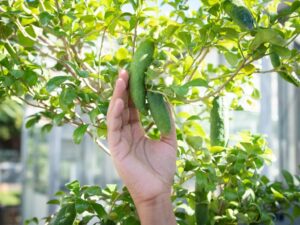
‘However, with the largest producer of finger limes being in Guatemala and the world’s only gene bank of finger limes located in California, Australia has some work to do to catch up as we are on the cusp of losing our stake in this and other native species. It is positive to see that since the establishment of ANFA, more Australian research like Mr Johnson’s is emerging and being collated, from genetics and disease through to pollination and nutritional characteristics. Now we must continue to progress forward for all native foods and ensure we lead the world in Australian native species.’
There are however challenges to the commercialisation of Australian citrus. According to Mr Johnson, the fruit is quite small and is not yet grown at scale, so it must be harvested manually which can be expensive and labour intensive. He said, ‘That means native citrus is unlikely to replace mandarin or orange at present, but it could be used as a supplement. Currently, native species are used mostly as a garnish in restaurant dishes, an ingredient in a sauce or curry, as well as jellies and tarts. It is also something you could find at a farmer’s market.’
And it is not just finger limes which show promise. ‘Citrus inodora for example is a nice fruit with a good flavour, so that could become a bit more widespread,’ Mr Johnson said, ‘The desert lime or Citrus glauca is another interesting one that is likely to be used more in processing because of its strong flavour. It might be able to be used more as a concentrate that can be added to juices to provide flavour and possibly health benefits. I am confident this research will pave the way for unlocking the full potential of these under-investigated native species.’
The research was published in Foods and supported by an Australian Government Research Training Program Scholarship.
The Queensland Alliance for Agriculture and Food Innovation (QAAFI) is a research institute at The University of Queensland established with and supported by the Department of Primary Industries.
Joel Johnson
M: 0488 062 474
E: joel.johnson@uq.edu.au
W: www.uq.edu.au
Natalie MacGregor
QAAFI Media
M: 0409 135 651
E: n.macgregor@uq.edu.au
W: www.uq.edu.au