
Sell the dream, not the plant
By John Stanley, Sid Raisch and Dries Jansen
The world of retailing has, and is, changing rapidly. Some retailers focus on selling products, while others focus on creating memorable experiences and getting customers to ‘Buy the dream’ rather than ‘Buy the plant’. Each retailer must decide which model suits their business. The key is not to get stuck in the middle. Whether it is intentional or accidental, an experience is being created. The question is more about whether it is a memorable experience, and whether that memory is a positive or negative one.
The premise of retailing is to add perceived value to the products being sold. The consumer experience plays the greatest role in the perception of value. Before delving into experiential retailing, it is important to ensure all experiences are ‘on brand’. In other words, the experience must relate to your values. Retail stores such as Glossier, which has several flagship stores in large US cities and whose products are also sold in Sephora and Lush cosmetics stores, do this exceptionally well.
The key is to make the customer experience memorable; you want them to talk to their friends about you and for them to become more loyal to you. What are the keys?
- Activities that engage them.
- Stories intertwined with your brand.
Start with the journey
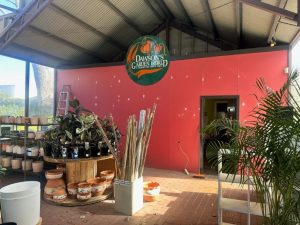
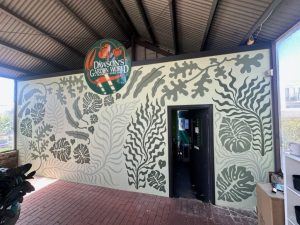
Customers should walk through different retail zones. Each zone ideally should be a different experience for them. This can be achieved by a different style of merchandising design, different colours, different music and different space allocations, but you must keep on brand. IKEA is brilliant at achieving this. Garden centres can do the same. Vignette displays selected on local gardens are more engaging than rows of plants, for example, ‘A Pollinators’ Paradise’ or a ‘Verge Garden’.
Contextual retailing is a seasonal event, as is gardening. Gardens change with the seasons, and so should a garden centre. This is a great opportunity to revitalise your centre at a minimum of every three months and up to six times a year: winter, early spring, spring, Christmas, summer and autumn.
Decide where and how you create interactive experiences
Experiences are based on emotions. What customers can touch, smell, hear and taste will all add to the experience. This is where coffee shops come into their own as they encourage customers to linger longer, as well as workstations in the garden centre. Create workshops in the coffee shop combining food and plants. Workshops such as ‘Garden to Plate’ could combine gardening with preparation and cooking. Alternatively, a separate area can be allocated as ‘The Garden School’.
Anticipation signage
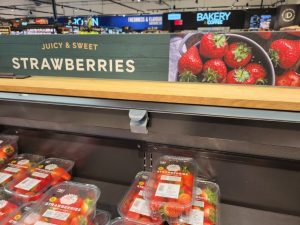
Anticipation signage comes into this category. Product sellers tell you what it is and how much it will cost. Anticipation sellers often sell more product because they create anticipation, and this can be done with one word on a sign. Marks and Spencer supermarkets in the United Kingdom do this exceptionally well in their fresh produce department. When it comes to merchandising, do not just sell the product; sell ‘Take and Make’ kits. This allows you to bundle products as well as remove the price sensitivity, as customers cannot compare prices easily.
Personalise the journey with technology
In a previous article, we explored how artificial intelligence (AI) can personalise the experience for customers. Clothing stores are now using smart mirrors to achieve this objective. QR codes are an ideal way to communicate stories about plants and how to care for them in your garden. Customers will also be looking for Instagrammable moments where they can record where they are and what they are doing. Have these opportunities located around the store and make sure your name is visible at the location and in the photograph.
Employ team members with personality
You can create a paradise for the consumer, but people buy from people, and the team makes a big difference to the average sale per customer. It is a challenge putting the right team together. The consumer expects a ‘Plant Doctor’, a ‘Plant Guru’, plus engaging personal service, all from the same person. Once you have built the right team, you need to care for them.
The ‘go to’ garden centre
Your aim should be to be the local ‘go to’ garden centre. This means engaging with suppliers to launch new releases at your store, hosting garden classes or having live demonstrations, for example, showing customers how to build a garden in a weekend. Yes, garden classes are still popular, but you need to get your topic right. Engaging with the local community may also mean turning the garden centre into a hub for local art festivals, farmers’ markets and other community events.
Accept the future
Consumers are splitting into two groups. One group will always want to go to a grid layout store and pick up plants from benches of plants based on price. The other group are seeking an experience, making their journey meaningful. The ‘Box’ stores are catering to the first group exceptionally well. Independent garden centres need to focus on the second group of customers. Provide a memorable experience and your customers will come back… with their friends.
Correction: We appreciate your feedback on this series of articles. In our first article, ‘Reinventing the independent garden centre’, (Hort Journal Australia, February 2026), we mentioned that the first garden centre was developed in 1955. David Green, the owner of Primex Garden Center in Pennsylvania, USA, reminded us that his grandfather set up a garden centre in 1943 and that David is still operating it as a family business.
John Stanley
Email: john@johnstanley.com.au