
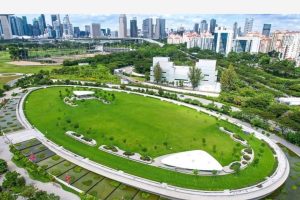
The future of green infrastructure
By Michael Casey
This is a difficult article to write, partly because it is my last for Hort Journal Australia, and partly because the subject feels larger now than it once did. When I first began writing and speaking about green infrastructure, it was often framed as an emerging opportunity, a new way of imagining what cities could become. And to me, and many others it still is. However, after many years of travelling, working, observing projects and speaking with people across different countries, I find myself thinking less about the novelty of green infrastructure and more about the urgency of it.
I have been fortunate to see many examples of urban greening, from highly designed rooftops and civic spaces through to informal landscapes that have emerged simply because communities needed shade, food, water or relief from heat. I have seen countries with strong planning systems and the capacity to invest in research and high-performing public spaces. I have also seen places where the need is just as great, if not greater, but where the ability to deliver is far more limited. That contrast stays with me.
My role as a technical panellist for the International Association of Horticultural Producers (AIPH) World Green City Awards has only reinforced this view. Reading and assessing green city initiatives from around the world gave me a privileged insight into what is possible when leadership, policy, technical knowledge and community ambition align. It also showed me how uneven the global response remains. Some cities are pushing forward with courageous, integrated and measurable approaches to urban greening, while others, often those facing the greatest climate and social pressures, are still fighting for the basic resources needed to protect their communities. That experience strengthened my belief that green infrastructure is no longer a specialist interest. It is a global necessity, but one that must be delivered with far greater urgency, fairness and practical support.
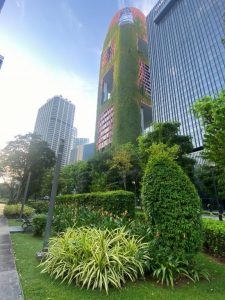
In some countries, green infrastructure is discussed as a design ambition or a sustainability target. In others, it is much closer to survival. Shade, cooling, food production, water management and protection from flood or heat are not abstract ideas in those places. They are daily realities, yet many of the developing countries most exposed to extreme heat, flooding and natural disasters are also the countries least able to future-proof their cities at the scale required.
There is something deeply uncomfortable about that. Many of these nations carry the consequences of industrial practices largely driven by the modern world, while having far fewer resources to protect their people from the impacts that follow. They may have contributed far less to the problem, yet they often experience the damage first and hardest. When a city lacks the money to upgrade drainage, increase tree canopy or provide resilient public open space, the consequences are felt in homes, streets, schools and hospitals. It is easy, in wealthier cities, to talk about the future of green infrastructure as though it is simply a matter of better design. The more I have seen, the more I believe it is also a matter of fairness.
The future of green infrastructure should still feel inspiring, one of the great opportunities of our time to reshape cities into places that are cooler, healthier, more biodiverse and more humane, yet despite decades of research, policy discussion and built examples, the global response remains painfully slow.
We are no longer talking about green infrastructure as a decorative extra. We are talking about living systems that help cities respond to heat, flooding, biodiversity loss, poor air quality and the growing disconnection between people and nature. At their best, green roofs and walls, urban forests, wetlands, raingardens and productive landscapes are working systems, not simply greener versions of what we have always built.
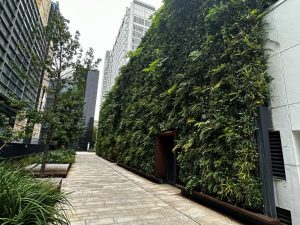
The irony is that we already know better. We know vegetation can cool surfaces, shade people and reduce heat stress. We know stormwater can be slowed, filtered and reused through living systems. We know biodiversity can be supported even in dense urban environments if we design with habitat and ecological connectivity in mind. And we know, and this should never be underestimated, that people need nature. The presence of plants, shade, seasonal change, birdsong and accessible outdoor space can transform a street, a school, a workplace or a hospital ward. In some communities, a shaded space or a productive garden becomes the most important social infrastructure available. The future city cannot be measured only by how efficiently it moves traffic or accommodates growth. It must also be measured by how well it supports life.
Green infrastructure has moved from the margins of landscape design into the centre of climate adaptation, urban planning, public health and economic resilience, yet too often it is still treated as optional. Around the world, cities are producing climate strategies, biodiversity plans and urban forest frameworks. The language is increasingly ambitious. But when we look closely at what is being delivered, the pace is not matching the promise. Too many cities continue to be designed around hard surfaces, short-term cost control and conventional thinking, built in ways that absorb heat, shed water too quickly, reduce habitat and disconnect people from the natural systems they depend on.
This is where nature-inclusive design becomes so important. A green city is not created by adding more plants. It is created by asking better questions from the beginning, about where nature can be meaningfully integrated, how a building can support biodiversity, how a roof can contribute to cooling and habitat, how a school landscape can support learning and wellbeing. It means designing with living systems from the start, not retrofitting them when budgets are tight. It means treating soil depth, drainage, irrigation, plant selection and maintenance as fundamental considerations, not afterthoughts.
We have not always treated green infrastructure with the same seriousness as other forms of infrastructure. Roads and drainage systems are designed, engineered, costed and maintained with clear expectations. Green infrastructure should be no different. Too often it is value-managed out of a project, planting depths compromised, irrigation removed, maintenance budgets underestimated. The living asset is handed over without the support needed to establish and mature. When the landscape struggles, the concept itself is blamed rather than the process that failed it. This is not a failure of green infrastructure. It is a failure of procurement, design coordination and long-term thinking.
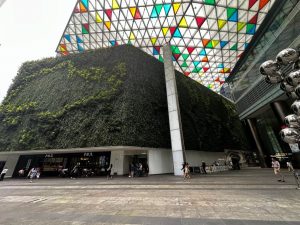
I have also come to believe we need more honesty in how we talk about green cities. The glossy images of towers wrapped in vegetation can be powerful, but they can also mislead, often suggesting green infrastructure belongs only to wealthy cities or architectural statements. Some of the most important work of the future may be far more practical: the shaded street that lowers heat stress, the restored waterway that reduces flooding, the school garden that connects children to food and ecology, the hospital courtyard that gives patients a place to breathe. Not every project needs to be iconic. Many simply need to work.
Wealthier nations have the ability to invest in research, standards and built examples. With that comes responsibility. We cannot speak about climate adaptation while ignoring the places that will struggle most to implement it. Knowledge must be shared, technical capacity must be built, and solutions adapted to local climates, cultures and maintenance realities. This does not mean lowering ambition. It means grounding ambition in reality.
For all the technology, modelling and policy language surrounding green infrastructure, success still depends on plants living in the places we put them, on understanding growing media, water, light, wind and establishment periods. On knowing that a concept drawing and a living landscape are not the same thing. A city does not become green because we say it will. It becomes green because someone makes the right decisions early enough, funds the work properly and continues to care for the living systems involved long after the opening photographs have been taken.
I remain inspired by what green infrastructure can do, but I am increasingly impatient with how slowly the world is responding. The evidence is there. The examples are there. The need is there. What is missing is the collective urgency to act at the scale required. For me, this work has always been about care, the care for people, care for place, care for living systems and care for the future. The next generation will not judge us by the strategies we wrote or the images we admired. They will judge us by the cities we had the courage to change.
Michael Casey
Director, Evergreen Infrastructure
National Urban Green Infrastructure Round Table (Co-founder)
World Ambassador for World Green Roofs Day
E: michael@evergreeninfrastructure.com.au