Safeguarding Australia’s botanic gardens:
Biosecurity in a changing world
By John Siemon, Damian Wrigley, David Smith, Peter Scott, Brett Summerell, Matthew Laurence and Sarah Dunstan
Australia’s botanic gardens are more than tranquil retreats and essential hubs for conservation – they are frontline sentinels in the battle against invasive species, plant pathogens and the growing threats posed by global change. As biosecurity risks escalate, Botanic Gardens of Sydney (BGS) is stepping up with innovative strategies, collaborative action and a renewed sense of custodianship for both endemic and exotic plant biodiversity.
The rising tide of biosecurity risks
Botanic gardens and, in fact, many public green spaces and natural landscapes face a complex web of biosecurity challenges. Invasive pests, soil-borne and airborne pathogens and the operational realities of managing living collections all contribute to a landscape of risk. Recent years have seen the emergence of new threats, such as the polyphagous shot-hole borer Euwallacea fornicatus1 and the spread of Phytophthora species2, which can devastate urban trees and ecological systems. Their impacts extend beyond environmental and economic losses, influencing cultural heritage and the wellbeing of First Nations communities.
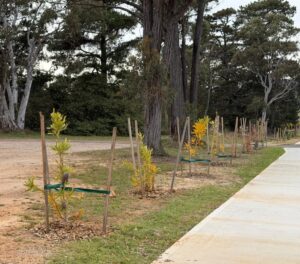
As recently as the end of November 2025, we received an alert from New South Wales biosecurity teams about a cruise boat arriving in Sydney Harbour that was found to harbour a small but active cluster of the invasive exotic European bumblebee, Bombus terrestris. While there are countless pathways through which new pest threats can reach our shores, this example highlights the ease with which new incursions can occur and underscores the need for more rigorous strategies for their early detection and eradication. We stand a chance of early identification and eradication of a pest species before it becomes a permanent fixture in the Australian landscape by establishing plant-sentinel processes, such as increased collaboration with biosecurity agencies, developing dedicated monitoring programs, using pheromone traps, or through e-DNA sampling.
A key threat to botanic gardens is the introduction of new plants (including those donated), organic products and water which may be contaminated, propagating from infected stock, and the movement of visitors and staff. Few botanic gardens can produce 100% of their plant or organic plant product needs, including potting media and mulch. The greenlife industry is instrumental to the success of the broader industry and is far from an insignificant contributor to the Australian and New Zealand economies. In Australia in 2023–2024, production nurseries supplied an estimated 2.2–2.3 billion plants, generating AUD2.65 billion in sales3. In New Zealand in 2019, the native nursery industry generated revenue exceeding NZD500 million per year and produced almost 40 million plants4.
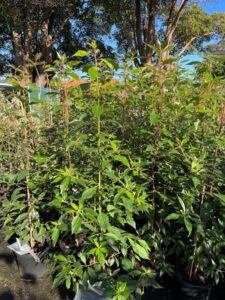
Despite the scale of the production and the implementation of industry production standards, such as the Nursery Industry Accreditation Scheme, Australia (NIASA) Best Management Practice Guidelines for Nursery Production Growing Media and Greenlife Market or the Australian Standard for Tree Stock for Landscape Use (AS2303:2018), the industry is failing to consistently produce disease-free nursery stock. In a project undertaken by the BGS’s PlantClinic, sampling from 1,437 potted tree stock across six nurseries (both commercial and community) resulted in 24% of plants testing positive for 13 described species of Phytophthora, including two new reports for Australia, highlighting the biosecurity pathway5. This is consistent with a United Kingdom study, which tested 4,000 plants from 118 nurseries. The percentage of Phytophthora-positive samples ranged from 20 to 70% with an average close to 50%6. Similar rates have been observed in Europe, the USA and in Western Australia (Matthew Laurence, pers comm).
Recognising the urgency, BGS engaged ArborCarbon in 2024 to develop a comprehensive Biosecurity Strategy and Operational Plan for all three BGS gardens and The Domain Sydney. This initiative, overseen by a dedicated project working group, involved a thorough review of horticulture, science, education, assets, events and visitor services. Site visits, workshops and extensive stakeholder engagement ensured the plan will be grounded in practical realities and organisational objectives. The strategy will emphasise early detection and rapid response. Timely identification of invasive species is critical to prevent their spread and protect both living collections and natural areas. Predefined roles, clear protocols and collaboration with external agencies are central to effective containment and elimination of biosecurity threats.
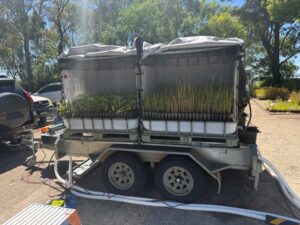
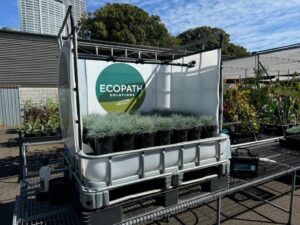
Innovation is at the heart of the BGS approach. Tools like PhytoGuard™, developed in collaboration with EcoPath Solutions, enable batch sampling and testing of plants and soils, providing rapid diagnostics for pathogens such as Phytophthora. Our Stop the Rot project, which aims to reduce the spread of Phytophthora by the live plant trade to urban forests, natural ecosystems, street trees, public green spaces and residential areas, will be further expanded and we hope to be able to use this information to improve horticultural practices with industry. Equally, PhytoGuard™ can be deployed in any botanic garden, enhancing working knowledge of the prevalence of Phytophthora species in both native and exotic stock or in-ground situations. These efforts underscore the importance of science-based management and the need for ongoing surveillance.
Biosecurity is not a solitary pursuit. BGS is committed to building capacity across the national and international network of botanic gardens. Once finalised, the Biosecurity Strategy and Operational Plan will be shared with Botanic Gardens Australia and New Zealand (BGANZ) members, fostering a proactive and coordinated response to threats such as myrtle rust and pest incursions. Upcoming surveys and committee discussions will further identify operational needs and best practices, ensuring that even the smallest gardens can contribute valuable data and insights.
The stakes are high. The nursery industry alone employs over 26,000 people in Australia and New Zealand and is valued at well over AUD3 billion. Rising costs and biosecurity concerns, however, threaten both economic and ecological stability. Botanic gardens must not only protect their own collections but also ensure they are not sources of new incursions – whether through untested donations, external contractors, selling contaminated nursery stock or spreading disease through the movements of well-meaning visitors.
As the temporary custodians of a 209-year-old collection we cannot leave this issue unaddressed, and the message is clear: biosecurity is everyone’s responsibility. Through vigilance, innovation and collaboration, Australia’s botanic gardens are poised to remain guardians of the green for generations to come.
Originally published in The Botanic GARDENer (Summer 2025). All images supplied by the Botanic Gardens of Sydney.
Authors’ affiliations
Botanic Gardens of Sydney – John Siemon, Damian Wrigley, Brett Summerell, Matthew Laurence and Sarah Dunstan.
ArborCarbon – David Smith and Peter Scott.
References
- Summerell, B.A. (2025). Polyphagous Shot-Hole Borer – an imminent threat to plant conservation? Australasian Plant Conservation, 34(2), 11–12.
- Summerell, B.A. & Liew, E.C.Y. (2020, February 21). Phytophthora root rot: its impact in botanic gardens and on threatened species conservation. Sibbaldia: the International Journal of Botanic Garden Horticulture, (18), 89–104.
- Greenlife Industry Australia. (2025). Nursery facts at a glance: The Australian nursery industry 2023-24.
- New Zealand Plant Producers Inc. (2019). Growing New Zealand: Native nurseries insights. New Zealand Plant Producers Inc.
- Laurence, M., Mertin, A., Scarlett, K., Pang, C., Tabassum, S. & Leishman, M. et al. (2024). Phytophthora in urban tree planting stock: Are we managing the risk to the urban forest and natural ecosystems? Plant Pathology, 73, 2030–2042.
- Green, S., Cooke, D., Dunn, M., Barwell, L., Purse, B. & Chapman, D et al. (2021). PHYTO-THREATS: addressing threats to UK forests and woodlands from Phytophthora; identifying risks of spread in trade and methods for mitigation. Forests, 12(12), 1617.