
Growing in uncertain times
By John Fitzsimmons
Amid continuing instability in parts of the Middle East, energy and supply lines for key greenlife production inputs are currently in a state of disruption. What challenges does this bring now and into the foreseeable future for our industry?
Hostilities in the Middle East have disrupted key supply chains and manufacturing systems worldwide. The resulting volatile energy supply and associated price spikes have thrown economies, manufacturing industries and logistics systems into disorder. This chaos means whatever happens today will not be what we wake up to tomorrow.
So, just how is Australia’s greenlife sector, especially its key suppliers, responding to current events? When I spoke with industry representatives, I found that opinions generally fell into two camps: the ‘glass half full’ andthe ‘glass half empty’. I heard some refreshingly rational responses to my questions, with some respondents choosing to remain anonymous here for obvious reasons. A summary of these conversations might read, ‘The challenges are unprecedented; however, we are flexible and resilient.’

For many horticultural enterprises, the price and availability of fuel and energy is front of mind. These factors affect the delivered cost of inputs, the price of deliveries to customers, and the cost of pumping, irrigation and climate control. Most businesses are now subject to a fuel levy of some kind in addition to higher costs overall. In one example, a B-double load travelling between Melbourne and northern Victoria cost $3,000 two months ago, yet at the time of writing, this cost had increased to $3,700. A major Queensland industry supplier is now using some $250,000 extra diesel each year for its own fleet, and reports transport companies now imposing fuel levies of between 5-17%.
Fuel supply is another issue. While the Federal Government currently maintains that Australia has diesel stocks on hand above its minimum stockholding obligation, availability of the necessary volumes to conduct business across the country remains anecdotally inconsistent, price notwithstanding. Much is being said about the fact that Australia had eight oil refineries operating in 2022, of which just two remain open now! Even those two refineries are scheduled to close soon. This situation resulted from a series of decisions based on the age of the facilities and their technical capabilities. We do produce our own oil, however, more than 90% of this fuel is exported for refining overseas, again due to technical and economic factors. Simply finding, producing or using more local oil would not provide an immediate or necessarily ideal option to solving our current supply chain challenges.
This is highly challenging for the transport sector overall, and for the broadacre agricultural sector as it enters the winter crop planting season. Graziers in many regions also need diesel and fertilisers to replace or renovate pastures damaged during recent floods and drought periods. They have little or no seasonal flexibility to ‘reschedule or delay’ these activities. Our options for greater self-reliance in fertilisers are limited.

What the industry experts are saying…
Industry body Fertiliser Australia says that some 60% of the urea fertiliser imported to Australia travels through the contested Strait of Hormuz. Much of our nitrogen is sourced from the Middle East and processed there or in Europe before being shipped here. Our nitrogen supplies will be impacted by the continuing conflict in that part of the world. However, nitrogen supply is only part of the equation, with the availability and cost of energy needed for processing and fertiliser manufacture adding further pressure.
Phosphorus pricing had been relatively stable. However, there are reports that supply of certain forms of phosphorus from China have been curtailed and internally redirected to the manufacture of solar and electric vehicle (EV) batteries. There is some local phosphorus production, but in the longer-term, phosphorus is a finite resource and may face supply constraints, with corresponding price pressures as supply and demand tighten.
But let us focus back on our local greenlife sector. It is generally agreed that irreparable damage has been done to national economies, supply chains, communities and individual enterprises because of the recent geopolitical instability in the Middle East. Even if today’s conflicts are settled tomorrow, the effects will be felt for months, possibly years. According to one industry insider, too many of his clients are preoccupied with short-term fuel pressures and not paying enough attention to the coming challenges around fertiliser price and supply.
In Australia, the lead time between ordering fertiliser and receiving it is typically six to nine months. We need to understand the logistics of the global supply chain which has been described as ‘networks within a network’. Those international actors who initiated the current Middle East conflict did not see that they were throwing a spanner into a very complex gearbox. One key supplier expects ‘uncertainty’ for six to twelve months and urges growers to ‘stay tuned, stay informed’ to help manage risk and respond quickly to changing conditions.
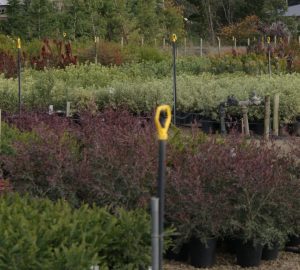
Consider now the view from the nursery floor. Photosynthesis is the process that drives plant growth, using sunlight as its energy source and carbon dioxide and water as key inputs. However, without nitrogen, phosphorus, potassium, calcium and other essential nutrients, plants cannot be grown to flowering or fruiting stage. Even amid current challenges, fertilisers remain fundamental to plant production.
Current Chair of Greenlife Industry Australia and General Manager of Fernland, Nick Hutchinson, said Fernland sources fertiliser products from more than 15 countries. ‘We are currently in a fortunate position because we have good stockholdings. We also source product from other parts of Europe and Asia. However, they also have to buy urea, and 20% of the world’s urea comes out of the Middle East.’
Nick said discussions have already been held across the Queensland industry and with competitors, including Garden City Plastics, to manage available stocks and ensure enough fertiliser is available to growers while avoiding panic buying. His company already stocks three different brands of fertiliser, however, they are considering alternatives where needed.
On a positive note, Nick regards the industry as ‘relatively buoyant’. His observation, based on lengthy industry experience, is that our industry does not get hit as much as other sectors in tough times like the one we are currently experiencing. ‘People supplying the landscape industry now are thriving. I know of one large nursery that has had three months of record sales,’ Nick says, adding that he sees the Australian economy as strong.
When interviewed, GoGrow’s General Manager Dan Cooper observed, ‘Things will get expensive and tight, but I think Australia is generally in a privileged position on a global scale. I don’t think we’re looking at complete supply failures. By switching between brands and availability, we’ll be able to carry on without too many disruptions. But prices will go up accordingly.’
Sustainable Liquid Technology Director Jamie McMaster confirmed that the Middle East situation directly affects diesel and nitrogen (urea and ammonium nitrate) supply. He adds, ‘China has shut its doors on a range of raw ingredients that we use in the hydroponic and nursery industry; technical grade MAP (monoammonium phosphate), potassium nitrate and calcium nitrate. Yes, there are other countries that supply those ingredients; however, the world has become used to the low cost, consistent quality coming out of China. That’s going to affect the hydroponic and protected cropping market significantly. There’s no indication when China may open the door and resume export. I think the industry should be concerned.’
‘Because of this volatility,’ Jamie continues, ‘We’re currently providing quote validity of one to two days and we’re getting a lot of forward orders in advance because of security and availability. It’s never happened like this before and possibly will not happen again.’
Simply put supply restrictions are reflected in quotation windows for supply to customers. ‘We are likely to get some key ingredients out of Europe at a much higher price, but there is also a lot more risk buying out of Israel. You’ve got to think well in advance and take a risk on the price today,’ Jamie observed.
Remember that nutrient suppliers, in turn, suffer supply challenges. If they manage to source nutrients today at $X a tonne, then that is what they will ultimately pay, and it is then factored into their current orders and forward supply contracts. If clients later cancel orders, suppliers will not be left ‘holding the baby’ as has happened in recent years following COVID-19, floods and droughts. There is risk on both sides of the transaction.
In summary, prices will rise and supply will be uneven. The consequence is that growers will have to budget for higher costs and shop around for supplies. Stable, long-term supply partnerships might be harder to find through 2026.
Adapting to supply constraints
In the short term, if you need to use less fertiliser and pay more for it, focus on improving overall growing efficiency. Look for ways to reduce nutrient loss through over-irrigation. This will involve fine-tuning your irrigation practices and paying closer attention to growing media and pH. In this context, your agronomist may become even more important than your fertiliser supplier. Biostimulants are also emerging as a significant area of development.
In the longer term, greater recovery of plant nutrients from industrial waste and by-products may need to be considered. Technically, and at least in theory, there are options for recovering both organic and inorganic sources of nitrogen and phosphorus from industrial waste streams as substitutable raw materials. The technologies and business cases are still being refined, but the potential is there and, anecdotally, some solutions appear to be close to commercial realisation.
In summary, stay calm, stay objective, consider all available options and work together with the industry to manage the disruption as effectively as possible. These supply challenges will be painful, but they are not terminal.
All images supplied by the author.