
The hidden harvest
By Caleb Roberts
Botanical name: Tuber melanosporum
Common name(s): Black truffle, Périgord truffle, French black truffle
Family: Tuberaceae
Origin or native range: Found naturally in European forests, the black truffle’s highest producing countries remain Spain, France and Italy. Australia is now the fourth-largest producer, and successful farms can be found around the country. There are several hundred truffle-like species in Europe, yet only a small portion are documented as edible. Fewer still have any traction on the culinary market. 300 species of truffle-like fungi are recorded in Australia, with estimates that up to 1,000 species remain undocumented. It is a literal buried treasure of culinary delights waiting to be discovered!
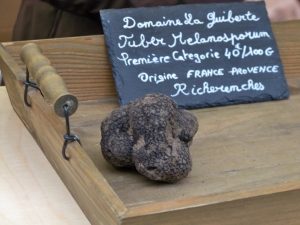
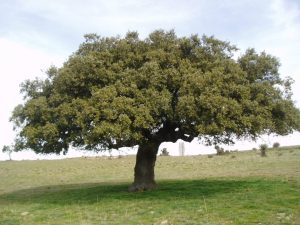
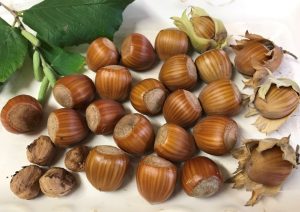
Description: Truffles are unique in our modern agricultural system as they are the fruiting body of a symbiotic fungus (Editor’s note: Yes, they are not a plant!). Essentially a mushroom roommate that lives around and within tree roots, each fungus needs a host. Preferred T. melanosporum host species include the holly oak (Quercus ilex), upright English oak (Q. robur ‘Fastigiata’) and hazelnut (Corylus avellana). The fungus exchanges nutrition and water that it extracts from the soil for the sugars produced by the host plant during photosynthesis. Under the right conditions, the fungus can produce fruiting bodies several centimetres below the surface of the soil. The developing hyphae of the fungus, the main body, is a fibrous white mass that envelops and permeates the existing root systems of the hosts. The fruiting structure that develops has a black skin, a dark interior, often with pale veins, and ranges in size from walnut to tennis ball. The largest fruit recorded in Australia weighed 1.5 kg. Harvest occurs from June to September.
Cultural requirements: Establishing a truffle orchard can be a finicky business. The host trees offer feedback on their performance to their grower via leaf colour and growth rates, but the silent fungal partner is much harder to monitor. They prefer a pH between 7.5 and 8.5, however the mycelium can grow but not fruit outside this range. A well-drained soil is a must. It is often advised to plant on a slight slope, with just enough fall to provide adequate drainage but not erosion. Heavy machinery is best avoided in a truffle orchard as compaction can destroy the soil structure tubers need to grow. Sunlight is important for soil temperature cycles and larger yields. A denser planting of host trees may provide more fruiting opportunities; however, this must be balanced with pruning requirements for light penetration. Around 200 host trees per acre is the industry standard. Black truffles naturally suit a hot spring climate, with summer storms and no early frosts. The annual rainfall in their natural range is around 425-1,270 mm and is the target of most commercial farms, who often irrigate to meet this volume.
Cultivation: T. melanosporum requires the fungal equivalent of pollination to fruit. The receptive mycelial cells on the host roots are looking for a compatible mating type in the surrounding soil. When inoculating a tree, both mating types are present, but one will often gain majority on an individual host. Farmers encourage strong yields by re-inoculating each year. An inoculation trench is dug between tree rows, and flooding these with a slurry of blended truffles ensures strong access to pollinators for your subterranean orchard.
Landscape and horticultural uses: Truffle harvesting usually commences around six years after planting, so the host trees need to be considered as long term additions to the garden. The ideal truffle orchard layout is like an open woodland in terms of density. Truffles’ subterranean nature means they can provide a ‘silent’ long-term investment in an otherwise ornamental setting.
Professional insight: I was recently speaking to a trufficulturist from Western Australia who likened truffle tasting to her previous work in viticulture. The project started as a hobby on a spare block of land whilst she managed a productive nursery in the city. Finding it relatively low maintenance, she continued working full time and only spent the occasional weekend on her farm. She was on her way home just after our conversation to dig her first harvest. She had high expectations for this yield, as there had been a proliferation of puffball mushrooms that season. Anecdotally, if you are seeing high fungal diversity, then you have achieved the right conditions for tuber development. Puffballs are said to be the closest to truffles in condition requirements. The tip she gave me was to ‘float the hyphae’, that is, to ensure a sufficient water table to support the host trees and a dry layer in the rootzone so the fungal mycelium develop properly. Regular shallow watering of this top layer ensures it remains moist enough for tuber formation. Truffle farming can be a rewarding and lucrative crop, a rare crossover of the harvest dipping into the mystery of what lies beneath.