
A farewell tribute to Hort Journal Australia
By Karen Smith
Honouring the magazine that served the industry for almost two decades.
When I heard Hort Journal Australia was closing, I felt deeply saddened. Alongside Gabe Mostafa and John Fitzsimmons, the magazine had been a big part of my life since its beginning in July 2008. The three of us worked on it for many years, together with the many others who contributed over time, as I mentioned when I retired a year ago. Gabrielle Stannus, a long-time contributor, stepped into the editor’s role and has done the magazine proud.
Some people thought Gabe was mad to launch a new industry magazine during the Global Financial Crisis, especially as it coincided with a decade-long drought and major industry change. However, we held our ground and kept our focus on plants, the magazine’s core subject.
In the early years, the industry gave us strong support. Robert Prince, then CEO of what was then the Nursery & Garden Industry Australia (NGIA), was especially supportive, and the state bodies also contributed monthly articles from their Industry Development Officers, with each state taking turns. Advertisers backed us too. Today, businesses spend heavily on marketing and social media campaigns, and that has inevitably taken a toll on magazines. Even so, Hort Journal Australia came out on top in an industry survey that found it was the preferred source of industry news for most readers.
Rather than repeat what I wrote when I retired, I want to share some of the fun we had along the way. Each year, we attended a range of conferences, and I cannot overstate their value. They are vital for building connections across the wider horticultural world and make good business sense as well. Conferences give you the chance to meet people in a more relaxed setting and to see the person behind their business role. People like to know who they are doing business with.
I remember being at the Queensland Green Expo in the early days when Gabe decided to have a few drinks with a representative from one of our advertisers. Gabe is not a drinker or a smoker, but somehow, he managed to put away a few too many bourbons with his well-seasoned companion and even joined him for a few cigarettes. Needless to say, Gabe ended up legless and lost his voice from smoking. I am pleased to report that he never repeated the experience.
Speaking of legless, Gabe almost lost a leg in China when our hotel porter arranged a taxi to take us to the HortiFlora Expo 2015 in Shanghai. Keen to help, the porter hurried us into the cab. Gabe had not quite managed to get both legs inside when the porter slammed the door on one of them. Poor Gabe was in agony!
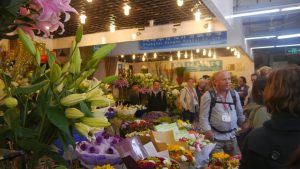
We did make it to the HortiFlora Expo and, unlike trade shows in Australia where attendance is limited to the trade, members of the public were invited because consumer attendance was believed to help drive demand. That may be true, but a few consumer-free hours would have given us more time to properly look around and speak with exhibitors. We were quickly swept into a sea of people. The staff at the desk could see what was happening and heard us calling out to each other, and they managed to guide us to the counter to collect our media passes. Taking photos was almost impossible because every time I lined up a shot, at least 20 hands holding smartphones would appear in front of me. Even so, the expo was a success, and we made many valuable contacts.
That evening, we went to a restaurant and ordered hotpot using Gabe’s translation app. The food was delicious, but the app caused some confusion, and we ended up with far too much to eat. The staff were embarrassed, although it was hardly their fault, as we did not speak Chinese and they did not speak English. To make up for the mix-up, they gave each of us a packet of frozen dumplings. A few minutes after we left, they chased us down the street because Gabe had forgotten his bag. We met such lovely people on that trip, and the staff at our hotel certainly appreciated the dumplings.
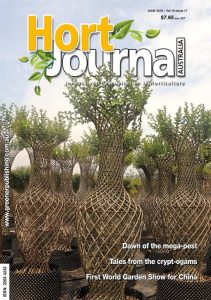
On another trip to China with the International Plant Propagators Society (IPPS), Gabe and I attended the first World Garden Show at Chang’An Flower Town in Zhejiang. As well as the fascinating show itself, we visited commercial nurseries where we saw some magnificent plants. The vase-shaped, plaited crepe myrtles especially stand out in my memory, and I later used an image of them on the cover of the June 2018 issue. During a visit to the ‘Venice of China’ in Wuzhen, we were walking beside the canal when someone said, ‘I would kill for a cappuccino’, and within minutes we came across a new Western-style café with a barista machine. The owners apologised because they did not know how to use the espresso machine. Luke Van der Staay said, ‘I can show you how,’ and people quickly gathered to watch. Luke is very tall and towered over the café owners. We all enjoyed the coffee, the young women were thrilled to learn how to use the machine, and we even had to pose for a group photo to hang on their wall.
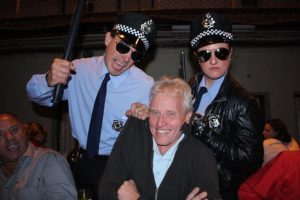
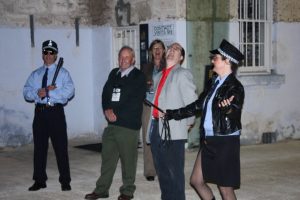
One IPPS conference dinner was held in the old Fremantle Prison, a convict-built site dating back to the mid-1800s that became a tourist attraction in 1992. What better place to network and catch up with colleagues from around the country than in a jail? The prison guard entertainers were ruthless. Some conferences even had fancy-dress themes, such as the IPPS event in Wellington, New Zealand. They really knew how to put on a show, with live music and plenty of fun. I remember winning a chocolate prize, or something similar, for my Cruella de Vil outfit.
Producing this magazine brought deadline pressure, late-night editing and the many challenges that come with any job. But the rewards far outweighed the difficulties, and I am deeply sorry to see the magazine close. No one, however, will feel that loss more than Gabe. He had the vision and determination to keep the magazine going through industry ups and downs, financial pressures and his own health challenges.
Well done, Gabe. I believe that you and all Hort Journal Australia contributors can be proud of what they gave to the industry.