
Curry leaf: A trick of the taste buds!
By Clive Larkman
Living in multicultural Australia means most of us know what a good curry is, or think we do! However, we may well differ on what our favourite curry style is. Do you enjoy an Indian vindaloo or korma, or maybe a Thai green curry, Indonesian rendang or Japanese katsu? Perhaps you prefer good old-fashioned Aussie curried sausages? Each of these dishes has its own specific flavours and spices, but the classic flavour underpinning them all is what we call ‘curry’.
Curry as a dish originated in India, based on spices commonly available at the time: coriander, cumin, turmeric, cardamom and pepper. It was not until the arrival of chilli on the sub-continent that curry became ‘hot’. Chilli came from central and southern America as part of the Columbian exchange of plants between the Old World and the New World. Similarly, curry started to travel the world, and its flavours were modified by the Portuguese, British and then the people of southern and eastern Asia.
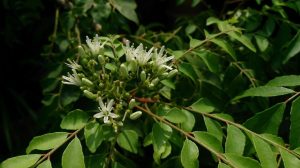
From this exchange came the specific flavour and aroma that we now associate with curry. The word ‘curry’ itself comes from the British during their rule of India, who borrowed the Tamil word kari which means spiced sauce or spiced meat. Whilst the overall flavour of a curry dish comes from a mixture of spices, there are several plants whose unique aroma now underpin a modern curry. One of these plants is curry leaf, Murraya koenigii (Synonym: Bergera koenigii), also known as curry tree, curry bush or sweet neem.
A small to medium-sized tropical tree in the citrus family, Rutaceae, curry leaf typically grows 4 to 6 metres tall but can attain heights of up to 8 to 10 metres under ideal conditions. Native to the Indian subcontinent, southern China and mainland southeast Asia, curry leaf has been introduced to other parts of southern Asia and even to Australia.
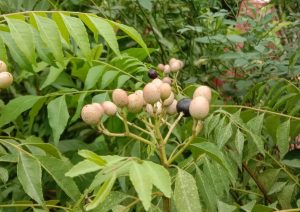
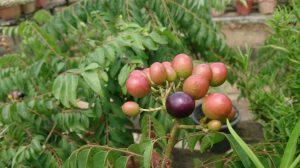
Curry leaf is easy to grow as an edimental in sub-tropical climates, in a full sun to part shade position free from strong winds. It prefers environments where the temperature stays over 20°C and does not respond well when planted in cold spots or under frosts. This tree prefers well-drained, slightly acidic soil that should be allowed to dry out slightly between waterings to prevent root rot. It is a hungry plant that likes a nitrogen-rich fertiliser. It will grow quickly and looks its best with a biannual prune, on top of the regular harvesting of its leaves for culinary purposes. In warmer climates, the berries should be removed when green to prevent the plant becoming weedy. Curry leaf is widely recognised as a serious environmental weed in tropical and subtropical regions of Australia, particularly in Queensland and New South Wales.
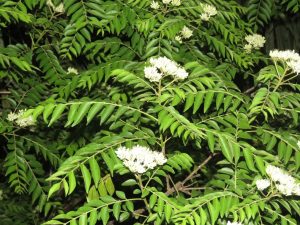
The leaves of this plant are used in many culinary dishes in India, Sri Lanka and Bangladesh. They do not dry well and must be used fresh. They are most widely used in southern and west coast Indian cooking, usually fried along with vegetable oil, mustard seeds and chopped onions. The fresh leaves are also valued as seasoning in the cuisines of southeast Asian countries including Cambodia, Malaysia and Indonesia. The berries are edible, but the seeds may be toxic to humans so should not be consumed. Curry leaves are also a key ingredient in Indian traditional medicines.
A great garden plant with a tricky flavour!
Editor’s note: Curry plant (Helichrysum italicum) is an herbaceous annual in the Asteraceae and therefore unrelated to curry leaf (Murraya koenigii). H. italicum has a curry-like aroma but is not recommended as a substitute for curry leaf in cooking. However, its leaves are used to flavour salads and cooked foods in the Mediterranean.