
Beyond Arabica: The wider world of coffee
By Clive Larkman
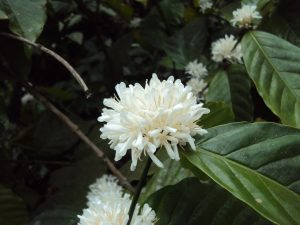
Despite there being over 100 species in the Coffea genus, only a few of those are cultivated for human consumption. In my last article, I wrote about how we only really grow Coffea arabica and C. canephora ‘Robusta’, or a hybrid of the two (‘Coffee: A shrub with history!’, Hort Journal Australia, April 2026). However, there are many other Coffea species that could be considered for wider cultivation, including C. liberica and C. excelsa.
There are over 10,000 Coffea cultivars and hybrids, most of them originating from Ethiopia. Like the species, they are selected for their flavour profiles and local growing conditions. The six main coffee cultivars, predominantly varieties of C. arabica, are ‘Typica’, ‘Bourbon’, ‘Caturra’, ‘Catuaí’, ‘Geisha’ and ‘SL28’. These cultivars are highly regarded for their flavour, quality, yield and climatic adaptability. They make up the foundation of most specialty coffee production, and they are all grown in most coffee growing regions around the world.
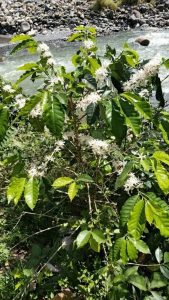
Currently, C. arabica makes up around 60-70% of world production and C. canephora ‘Robusta’ is around 30%. The balance of coffee production is made up of C. liberica at around 1.5-1.8% and C. dewevrei is less than 0.5%. In Australia, our coffee production is made up almost entirely of C. arabica with some special cultivars that have been selected for local growing conditions. Australian coffee is grown in the sub-tropical climates of the Northern Rivers region of New South Wales and Far North Queensland, mainly on the tablelands above Cairns. Australian conditions are drier and our coffee-growing areas are generally located in lower altitudes than their counterparts in Africa and Asia.
Each Coffea species is used differently based on its flavour profile, caffeine content, ease of cultivation and place of origin. The species and their cultivars have unique flavour profiles as described below:
- Arabica (C. arabica) is prized for its complex flavour, higher acidity, and lower caffeine content.
- Robusta (C. canephora ‘Robusta’) has a bitter, earthy, highly caffeinated flavour.
- Liberica (C. liberica) produces a smoky, woody, and nutty flavour.
- Excelsa (C. dewevrei) is highly prized for its unique, tart, and fruity profile*
As our tastes mature and the world of coffee drinking expands, Liberica and Excelsa, as well as other minor species, will become part of the mix. They will appear as unique varieties and also as part of breeding programs that will focus on growing for flavour, yield and disease resistance in a wider range of climatic zones. Liberica is mainly grown and used in southeast Asia. With a large population of people hailing from that region now living in Australia, I believe that we will soon start to see Liberica sold in specialist coffee shops here.
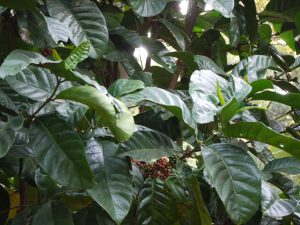
New species of Coffea are still being identified even now, and these may also end up being served in our cafes and homes. In the first decade of the 21st century, researchers from Kew Gardens named seven new species from the Madagascar mountains. Two new species have been discovered in Cameroon including C. charrieriana which is caffeine-free. It is expected that many of these new species (plus some of the older ones) will be put into intensive breeding programs. With the discovery of C. charrieriana, it may be possible to develop caffeine-free cultivars with good flavour by crossing it with other coffee varieties.
The number of coffee plants in the world has also increased due to the work of taxonomists. In 2011, they moved all the plants in the Psilanthus genus to the Coffea genus. This move boosted the Coffea genus count by more than 20 species and resulted in Australasia and Asia now being considered as part of the Coffea native range. There is some hope that the increased genetic diversity within this genus, given this reclassification, may eventually result in new coffee flavours and wider growing regions. As I write, there are currently 133 accepted species and one natural hybrid in the Coffea genus.
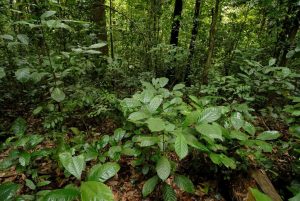
However, it is important to note that not all Coffea species contain caffeine, and that the presence of caffeine is not restricted to plants within the Coffea genus. Caffeine is a secondary metabolite acting primarily as a natural pesticide and allelopathic agent in plants, including not only coffee, but also tea (Camellia sinensis) and cocoa (Theobroma cacao). Caffeine most likely evolved as a defence against pest attack in those plants within their original high, humid environments, much in the same way that capsaicin evolved in the Capsicum genus as protection against mould.
Whilst caffeine is a secondary metabolite in plants, it is classified as a central nervous system (CNS) stimulant and psychoactive drug when consumed by humans. Where would many of us be without our morning coffee to wake us up? Perhaps we should thank hot, humid environments for producing this great, natural drug! * Editor’s note: Some people working in the coffee industry argue that Excelsa is a species whilst others claim that it is a variety of C. liberica.