
Growing smarter at GreenTech
by John Fitzsimmons
The horticulture industry is always looking for ways to work smarter, and automation and efficiency have long played in a role in this process. This month’s GreenTech 2026 expo in Amsterdam showcases the horticultural world’s technological innovations. In this article, I share a summary of some of the leading technology on display at this event. Many of the products and services described below are incorporating artificial intelligence (AI) technology to target real-world growing challenges.
Once concerned with the simple act of growing plants, horticulturists are now having to find focus in a blizzard of technological innovations spinning out daily. The grower perhaps processes mechanically based and biological developments more readily than other breakthroughs; however, newer AI-based technologies are potentially harder for traditional ‘green thumb growers’ to process, interpret and evaluate. Pulling these needs, wants, expectations, and options into a clear and workable perspective is becoming an ever-greater challenge.
GreenTech 2026 attempts to solve this problem. This year’s theme is ‘PURE’, with the event focussing on clarity and purpose in crop production. The event highlights the role of skilled professionals working responsibly in controlled growing environments, with an emphasis on consistency, transparency and trust, alongside the move towards chemical free cultivation. There is a strong focus on sustainable food production, noting increasingly constrained resources – land, water, clean air, plant nutrients, and capital to finance structures, equipment and labour.
To recognise leaders in this industry, GreenTech organisers honour outstanding products and services through its annual Innovation Awards. This year, a new category ‘Impact’ joins the existing ‘Concept’ and ‘Innovation’ categories. According to the awards jury, the purpose of this new category is to recognise organisations that have achieved significant real-world impact with an existing product, with at least two years of market presence and proven high impact on sustainability and revenue growth.
There are nine finalists across these three categories this year, of which Awards Jury Chairman, Egon Janssen, says, ‘This year’s nominations clearly show a shift from data collection towards actionable insight. AI is becoming essential in transforming raw data into meaningful decisions. At the same time, the power of semantic data and system integration is still underutilised. Unlocking this could significantly accelerate the move towards smarter, more connected greenhouse systems.’
‘CONCEPT’ CATEGORY
Biobest – Home compostable breeding sachet for predatory mites
These home compostable sachets have been engineered to replace conventional polyethylene delivering the same crop protection performance with sustainable materials. At the end of a crop cycle, used sachets can be shredded and composted on site alongside plant residues. The material breaks down into CO₂, water and biomass, contributing to soil health rather than accumulating as waste. The result is a practical, drop-in solution that fits existing grower workflows.
MANNA CEA Co., Ltd – MESH: AI Greenhouse Automation & Management Manna CEA Co Ltd has developed an automation ecosystem delivering AI-assisted climate control for small and mid-sized growers. One all-in-one module per actuator channel controls and diagnoses actuator health, reducing complexity and simplifying expansion. Modules and sensors connect via BLE mesh; the MESH hub maintains offline-safe local control. The web/app dashboard provides live status, alerts, history and guidance, with optional gateway/cameras for integration and AI crop monitoring.
Zayndu Limited – LettucePrime
Zayndu Ltd’s ‘Z series’ is a cold plasma seed treatment machine that uses ActivatedAir™ to prime seeds and improve yield. A high voltage plasma generator exposes seeds to conditions ‘not dissimilar to a lightning strike’, according to its manufacturer. This removes the external waxes of the seed layer, increasing the permeability of the seeds; greater permeability improves water absorption, in turn producing faster germination. Different species react in different ways. More than 120 varieties across more than 50 species have been tested using the technology. With a simple user interface, the company believes complex engineering solutions could be condensed down into single button presses and lightweight interfaces. It also aims for less time training and upskilling operators, the machines working ‘out of the box’ with minimal skills required. The S-Prime package has been released for spinach, the first pre-optimised treatment tailored to individual crops and growing environments.
Track32 B.V. – Seedling Trials
‘INNOVATION’ CATEGORY
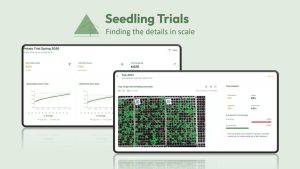
Seedling Trials converts seedling trays into fully measurable datasets using QR tracking, drones and AI. Each seedling is analysed for germination, leaf area, uniformity and growth within 24 hours. This enables breeders to move beyond manual observations, allowing earlier and more precise selection decisions. By identifying top-performing plants sooner and understanding batch variability, breeding programs become faster, more consistent, and less reliant on labour-intensive processes. Results can be monitored directly from your smartphone using Track32’s Seedling Measurement App.
Koppert B.V. – Limonica Ulti-Mite
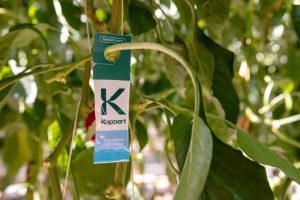
Limonica Ulti-Mite is a patented development combining Amblydromalus limonicus, a predatory mite, with the advanced Ulti-Mite slow-release sachet to control thrips and whitefly. Made from 100% industrial compostable foil, the predatory mite sachet creates an optimal microclimate for mite reproduction and release, even under challenging conditions. Unlike traditional paper sachets, Limonica Ulti-Mite retains moisture and resists humidity fluctuations, ensuring uninterrupted mite development. The result is reliable pest control with reduced intervention, supporting more sustainable greenhouse production systems even against invasive thrips like Thrips parvispinus.
Sensie – Sensie Omni
Sensie Omni shifts horticulture from climate-steered to plant-steered. This wireless intelligence system captures the interaction between root supply, climate demand, and direct plant response. By visualising stress in real-time, it makes research-grade plant insight understandable and affordable at commercial scale. The platform distils complex physiological signals into actionable irrigation and climate recommendations, making research-grade plant insight understandable for anyone and affordable at commercial scale.
‘IMPACT’ CATEGORY
Octiva – Lumion
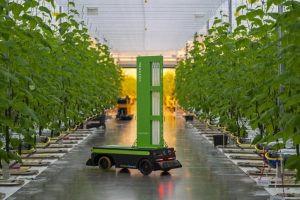
Lumion is a fully autonomous greenhouse robot designed for residue-free crop protection using Ultraviolet-C (UV-C) technology to destroy the DNA/RNA of mildew and pathogens. It is primarily used in Controlled Environment Agriculture (CEA) on crops including strawberries, cucumbers, tomatoes and peppers. This robot can work autonomously in the greenhouse throughout the night.
PATS – PATS-C
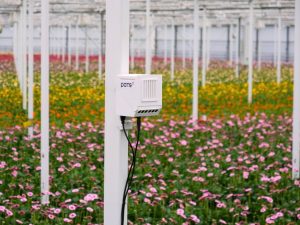
PATS-C is an AI-driven automated insect monitoring system that uses infrared cameras to detect and identify moth species without using physical traps, then shares that data in real time via 5G. With PATS-C, growers detect pests up to two generations earlier, significantly reducing overall crop protection costs and pest damages. In 2025, PATS introduced caterpillar prediction to this system, enabling growers to anticipate outbreaks up to a week ahead and act more efficiently at the optimal moment, accelerating the transition to biological control.
Van Schaik Rack Solutions – Air Tray® Technologies
Air Tray® Technologies eliminate root-zone inefficiencies through engineered air pruning and improved oxygen exchange. This breakthrough line prevents root spiralling by having no horizontal surfaces. Air Tray® works by creating an air space around the root zone to maximise the amount of contact the air can have with the roots. Roots are then air-pruned by the air resulting in lateral root formation throughout the root zone and preventing singular tap root formation. This improves the structural integrity, and stability in root systems after transplant is dramatically improved. This simple, scalable design enhances root development, reduces substrate use by up to 50%, and lowers disease pressure without chemical inputs. Air Trays are designed to fit on wire racks, which is beneficial for internal transport.