The real work of working smarter
By Patrick Regnault
‘Work smarter, not harder’ is a popular adage in these times. In reality, working smarter often depends on first doing the harder work of understanding a problem deeply and approaching it with flexibility. To solve a problem, we need to examine it from different perspectives. Sometimes that means looking beyond our own field to find more innovative, practical and efficient solutions. If our knowledge is limited to a particular speciality, the solutions we find will also be limited to that domain.
Take for example, a health facility in Brest, France, which had to reconcile the need of patients with Alzheimer’s disease and their duty of care. People living with this disease benefit from structured, regular walks, otherwise they can become confused and wander, sometimes away from the facility where they are living, to be found hours or days later bewildered and scared. To remedy this problem, and improve the patients’ health and carers’ work, this French facility designed a vegetated, high-walled courtyard with a figure-of-eight path, sitting areas and no dead ends. The patients could spend hours walking in the garden amongst scented and tactile plants reminding them of earlier times. The carers had less to worry about where their charges may be, making their work less stressful. The families spent more time with their loved ones as they could walk with them and feel less overwhelmed. In this case a design resolved many problems. Understanding the disease and the symptoms experienced by people living with it, as well as the needs of the facility, carers and the patient’s families, required a multi-faceted approach that took more knowledge input and deep thinking but has ultimately paid off.
Turning the table
Often, the use of soft landscaping is relegated to second fiddle in hard landscapes and projects like the one described above. Hard landscape structures provide visual impact and a certain cachet to large public or corporate projects; however, the benefits of soft landscaping (or softscaping) are often more subtle, which is better for the environment, people, health and wallets. Softscaping is a smarter way to design spaces and reduce heat stress in urban environments, and plants can be used to enhance hard landscape features. Working with plants requires an understanding of botany, soils, and even zoology, and softscapes require long-term maintenance, so don’t ignore this aspect when budgeting. However, I believe that a smarter way to design our outdoor spaces would be to turn them around by putting the softscape first and using the hardscape more sparingly to elevate the design.
Enskilling
If we are to place softscaping more centrally in the way we design outdoor spaces, we must also place greater value on the people whose skills make that possible. Workplaces need to place adequate value on skilling up their employees if they are to work smarter in this space. This action will improve staff retention, work quality and performance, and the long-term future of the industry. Employees no longer stay in the same workplace for decades, so how do we retain them? Are we to keep our knowledge to ourselves for fear of possible later competition? Are we so insecure as to keep our understanding to ourselves like Gollum and his ‘Precious’ in the Lord of the Rings?
One way to retain good employees is through the process of ‘enskilling’. Whilst the term ‘enskilling’ refers to continuous learning, it does not quite mean upskilling or reskilling, at least in the way we understand those terms. Enskilling is sometimes used to describe the process of equipping employees with the knowledge, competencies and mindset necessary for success, rather than just training them on a specific tool. Enskilling is a proactive approach to help employees grow, and the workplace to develop talent. It is a low-cost strategy that has long-term personal and societal benefits, making people happier, boosting self-esteem and cooperation between individuals, and reducing potential conflict. A happy workplace reduces stress so things get done more efficiently.
Benefits of working harder
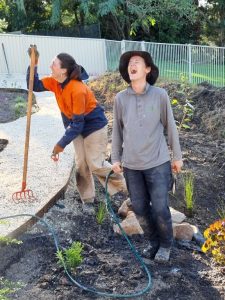
Working harder can also help us to work smarter, despite the perception that working harder shows lack of cognitive abilities. Working hard can help workers to develop focus, resilience and body awareness, whilst giving them the foundation to find practical solutions to working smarter through embodied understanding. There is valuable teaching in doing the hard work. Physically, hard work can provide us with useful feedback, showing up how we misuse our bodies, highlighting our lack of flexibility and, too often, our lack of grounding. Mentally, hard work puts us in situations where we start to realise how unsettled our mind is. There are moments when constraints of time or space leave no option but to do the work the hard way.
If we are physically and mentally unprepared for work, then the idea of giving up on it will win. If we understand the physical constraints of a task, we will find a way to achieve it with a mix of physical and cognitive ability. A few years ago, a client of mine bought a 300 kg garden ornament. The timing and space required myself and my employee to physically move this ornament ten metres to its final location. We used the ancient technique of sand on timber rails to move it. This transportation method proved relatively easy physically and gave my employee and the client a realisation that understanding ancient methods could help find modern solutions.
Ornamental horticulture and landscaping require the synergy of body and mind, the understanding of the physical world and the creative spirit of our humanness. To work smarter, we need to embody that understanding. We also need to share our experiences and pass the batons on to the next generation so that they too can develop this work ethic. No one needs to reinvent the wheel, but we can all improve how that wheel will turn.
Postscript: As this is my last article for Hort Journal Australia. I would like to express my deepest thanks to the editors, publisher Gabe Mostafa, and the readers. I have learnt a lot from you all.
Patrick Regnault FAIH RH0062
Interactive Landscapes
E: patrickregnault@hotmail.com