Greening more resilient cities with Woody Meadows
A pioneering, urban-greening approach transforming Australian cities into vibrant and biodiverse spaces has been released to the public, empowering home gardeners and land managers with over a decade of research and knowledge in native plant design and management.
Developed at the University of Melbourne, ‘Woody Meadows’ are redefining how councils, communities and developers design and maintain landscapes – turning concrete jungles into thriving green spaces.
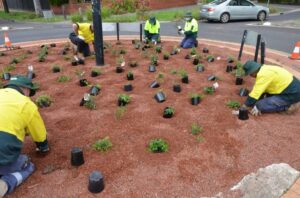
The Woody Meadow Guidelines is a free, comprehensive resource for people to design and install their own Woody Meadows. It includes step-by-step instructions on species selection and site preparation, establishing plants, maintenance and costs.
Associate Professor Claire Farrell from the School of Agriculture, Food and Ecosystem Sciences said the guidelines were developed in collaboration with communities and partners for those who design and maintain public green spaces, and home gardeners seeking to increase their garden’s biodiversity.
‘Hotter, drier and increasingly populated cities mean that maintaining urban vegetation can be expensive, but Woody Meadows overcome this challenge through a low cost, low maintenance design using diverse, drought-tolerant Australian trees and shrubs that need 75 per cent less maintenance,’ Associate Professor Farrell said.
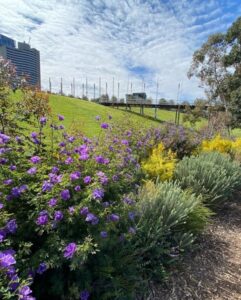
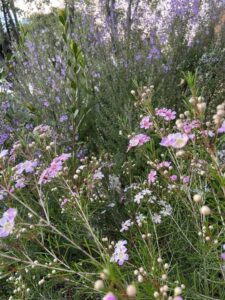
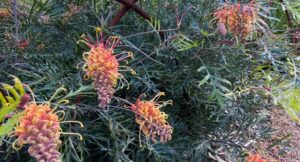
Woody Meadows are typically filled with species that flower at different times, meaning vibrant flowers and foliage, from yellow-flowering wattles to purple blooms of lilac hibiscus, are available to native pollinators, birds and people all year round.
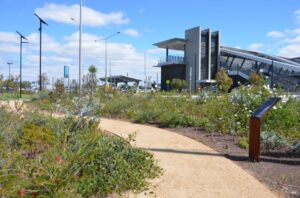
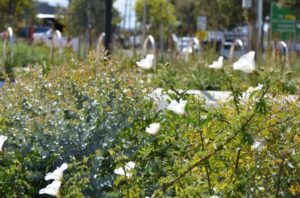
Since its first trial a decade ago, Woody Meadows have expanded into nearly 60 sites across southern Australia and covering over 30,000 square metres with more than 280 native plant species and cultivars.
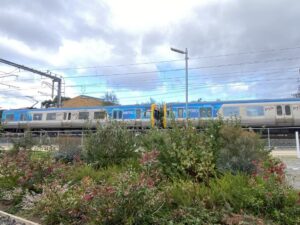
Woody Meadows can be seen in and along roads, rail corridors, nature strips, parks, industrial sites and even roundabouts. They also feature in major urban projects nationwide, including Melbourne’s Level Crossing Removal Project, the Sydney Metro Rail, and East Subiaco Redevelopment in Perth.
Associate Professor Farrell said the project’s success was heavily driven by collaboration with local councils, state governments, transport and water authorities, cemeteries, landscape architects, and community groups, all seeking creative, sustainable, and cost-effective greening solutions.
‘We have seen an exponential uptake of Woody Meadows by local land managers, demonstrating there is large demand for liveable and resilient green spaces in our cities that benefit people and support native ecosystems,’ Associate Professor Farrell said.
Ongoing research at the Woody Meadow ‘Living Labs’ at the University of Melbourne means each new installation builds on lessons from previous meadows, ensuring continuous refinement informed by science, horticultural best practices and real-world conditions.
‘Woody Meadows are changing the game for councils and private organisations to move from a “business as usual” to a “biodiversity as usual” approach. It is truly exciting to expand the opportunity for more people to create greener, sustainable spaces in our cities,’ Associate Professor Farrell said.
The project was made possible through funding from the Australian Research Council.
Woody Meadow Project Partners:
- City of Greater Dandenong
- Greater Western Water
- Merri-bek City Council
- Department of Transport and Planning (Victoria)
- City of Whittlesea
- City of Boroondara
- Hume City Council
- Wyndham City Council – Greening the Pipeline project
Download the Woody Meadow Guidelines here: www.woodymeadow.unimelb.edu.au/