
Sunday, February 15, 2026

landscape

Book ReviewEditorial

Restore: How Green Spaces support Human Restoration

By Gabrielle Stannus

Sandra Schwarz is a Melbourne-based Landscape Architect with a passion for restorative and therapeutic landscapes. Her book Restore demonstrates how green spaces support human restoration, whilst being underpinned by the guiding question, ‘HOW can you do that in practice?’Continue reading

Read More
Plant PalettePlants

The perfect cherry for a tropical Christmas

By Caleb Roberts

Botanical name: Malpighia emarginata ‘Florida Sweet’

Common name(s): Acerola, Barbados cherry, West Indian cherry, wild crepe myrtle, Antilles cherry

Family: Malpighiaceae

Origin or native range: Hailing from Central America and Mexico, the highest production of Malpighia emarginata (Syn.… Continue reading

Read More
edible hibiscusPlants

Not just a pretty flower: The edible hibiscus

By Clive Larkman

Over the years I have often written about edimental plants and how good they are for the urban garden. We all know that prior to the modern supermarket the home garden was a major source of edible plants.Continue reading

Read More
EditorialEditors editorial

The business of growing people

In this issue, we focus on the theme of professional development. Before helping your employees to develop themselves professionally though, I ask you to consider firstly what it was that inspired you to enter the horticultural industry? How might this knowledge better help you understand the reasons why people enter (and perhaps leave) this workforce?   Continue reading

Read More
Careers & Education

Reclaiming horticulture’s lost skills

By Patrick Regnault

We want our workforce to be capable, skilled and knowledgeable. However, recent technological advances may result in fundamental horticultural skills being lost as we rely heavily on technology to do our jobs. Are we at risk of ‘deskilling’ our industry in the name of progress?Continue reading

Read More
Careers & EducationScholarships

Global Footprints Scholarships

Celebrate centenary year with exceptional horticulture scholars

The Global Footprints Scholarships program celebrated its centenary year on 22 September 2025 at Botanic House Sydney, honouring 25 talented young people in agriculture, horticulture and vocational trades. The scholarships, which focus on sustainability and practical leadership, provide scholars with the opportunity to gain international experience and broaden their knowledge in their chosen fields.Continue reading

Read More
Environment & SustainabilityPest and Diseases

The pests that got away: Part 2

Varroa mite

By Denis Crawford

Varroa mite has spread significantly since it was detected in sentinel hives at the Port of Newcastle in June 2022. Varroa mite is likely to have a significant impact on the hives of commercial and recreational beekeepers, as well as decimate feral honey bee colonies.Continue reading

Read More
Careers & EducationProfessional Development

Emerging leaders: Equipping the nursery industry for tomorrow

By Jennifer McQueen

The nursery industry, like the world around it, is changing fast. Businesses face thorny challenges, from biosecurity incursions and climate impacts to politics, shifting markets and new technologies. At the same time, staff expectations are shifting. People want to learn, grow and take on responsibility.Continue reading

Read More
Environment & Sustainabilityfungal pathogen

A plant-based solution to a wicked problem

By Tex Moon

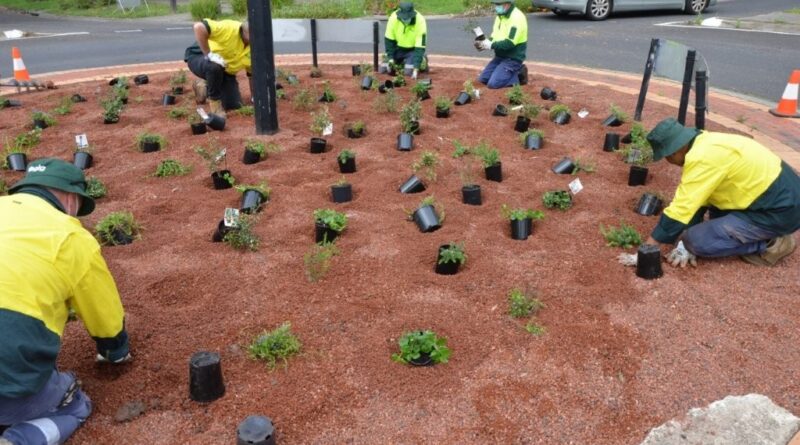
Within the Australian Garden at Royal Botanic Gardens Cranbourne, the Dry River Bed precinct has undergone a remarkable transformation that redefines both the aesthetics and ecological function of native plant landscapes. Once dominated by dense woody shrubs, this 3,300m² curved and sunken space served as a structural and visual link between the Red Sand Garden and the Eucalypt Walk.Continue reading

Read More
Research & Development

The Rose Project

By Kim Syrus

Many Australian growers have investigated alternative ways to produce field roses grown on their own roots. Unfortunately, the results of these ventures have, in the main, been less than successful. Aware that rose growers in both the United States and Europe have successfully transitioned portions of their crop to cutting-grown plants, I applied and was awarded a Hort Innovation Churchill Fellowship.Continue reading

Read More